Tell us about the job
Takes about a minute. No obligation.
Sizing a heat pump for Garland County starts with a question a load calculation alone does not answer: how far does outdoor temperature fall on the hardest nights of the season, and what does that do to the unit's rated capacity? Homes in Garland County, AR run heat about six months a year, from November through April. Across those months, a heat pump's refrigerant-side capacity tracks outdoor temperature downward, so a unit that covers the load at forty degrees may leave the house short at twenty. A contractor who skips that cold-weather check will undersize the system, and the backup resistance elements will carry the gap all winter, running far more than the homeowner was told to expect.
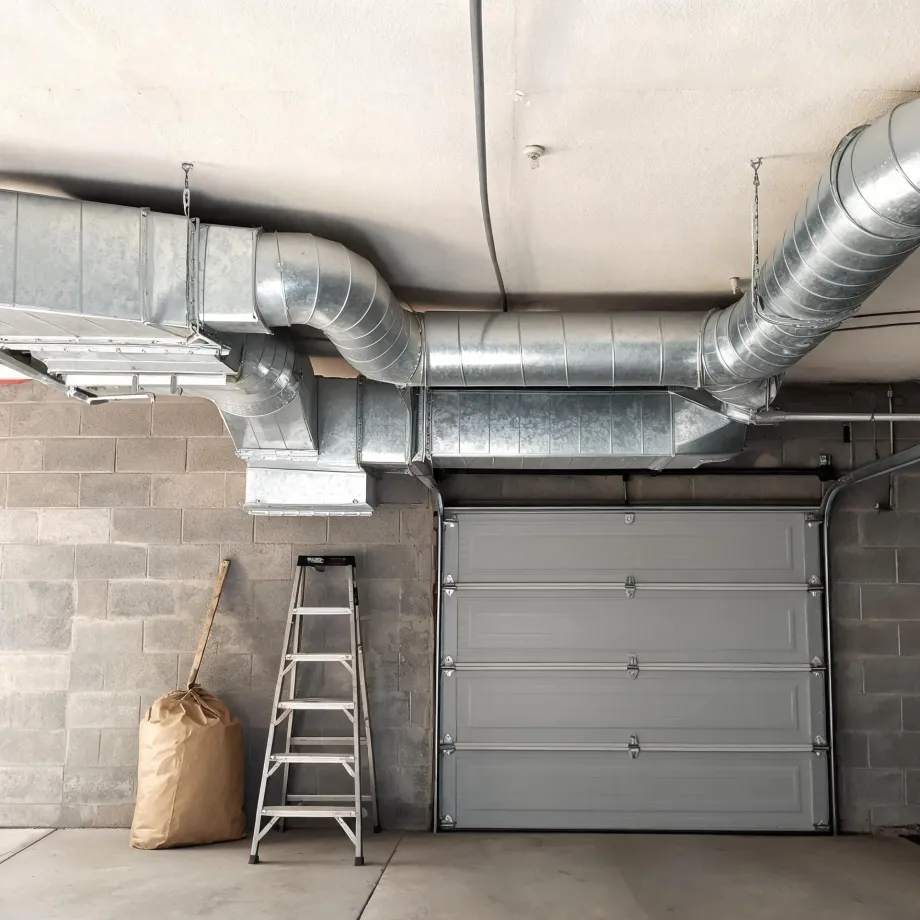
Ductwork sized and sealed for a previous generation of forced-air equipment does not automatically carry what a heat pump needs, and in Garland County a contractor will open up and assess what is already running through the walls before anything else on the job gets priced. Half the homes in Garland County, Arkansas were built in 1984 or earlier (2020-2024 ACS 5-year). That history shows up at the register and in the plenum: gaps, undersized runs, and connections that held fine for what they were built around can become the reason a new system underperforms. The electrical panel gets the same scrutiny, because the load a heat pump draws has to match what the service can actually deliver.
What a Heat Pump Installation Covers
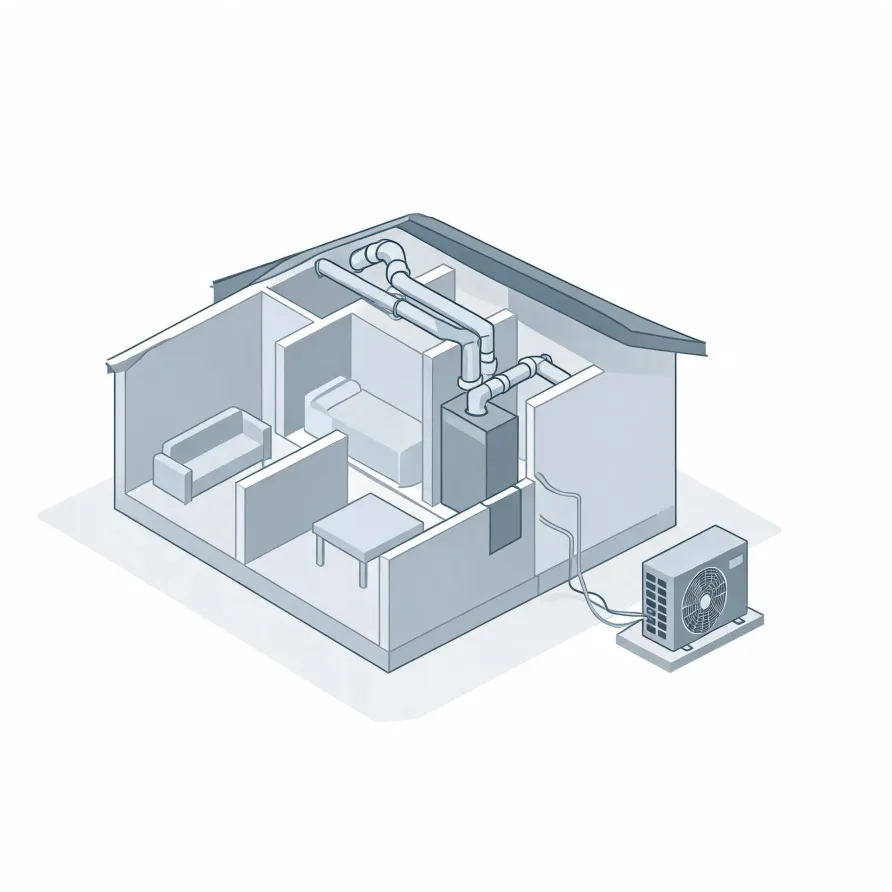
The outdoor unit sits on a pad beside the house and holds the compressor and coil that do the system's core work. Inside, an air handler mounts in a mechanical room, closet, or attic and moves conditioned air through the home. Together these two units make up the heart of what gets placed during an installation.
A refrigerant line set runs between the outdoor unit and the air handler, connecting the two with insulated copper tubing that carries refrigerant back and forth. A thermostat goes on an interior wall where it reads the home's temperature and tells the system when to run.
The drawing shows a typical layout, and a licensed contractor determines exactly what applies to this house.
Find a contractor in Garland CountyGarland County by the numbers
131 severe weather events were recorded in Garland County, Arkansas between 2015 and 2024.
NOAA National Centers for Environmental Information, Storm Events Database, bulk CSV export, events 2015-01-01 through 2024-12-31.Half the homes in Garland County, Arkansas were built in 1984 or earlier (2020-2024 ACS 5-year).
U.S. Census Bureau, 2020-2024 American Community Survey 5-Year EstimatesGarland County, Arkansas holds 52,760 housing units (2020-2024 ACS 5-year).
U.S. Census Bureau, 2020-2024 American Community Survey 5-Year EstimatesOwners occupy 69.4% of the occupied homes in Garland County, Arkansas (2020-2024 ACS 5-year).
U.S. Census Bureau, 2020-2024 American Community Survey 5-Year EstimatesHeat Pump Installation Rules for Garland County, Arkansas2 codes, standards, and laws
Licensing and Legal Requirements in Garland County, Arkansas
An Arkansas HVACR licence is good across the state: no city or county may require its own licence to do HVACR work, though local permits and inspections still apply.
Arkansas requires an HVACR licence or registration: it is unlawful to do HVACR work without the appropriate one unless the chapter exempts you.
Severe Weather Events in Garland County
Garland County's climate puts real demands on heat pump equipment, and those demands vary with how hard the weather pushes. A heat pump sized and installed for local conditions handles those swings better than one spec'd for somewhere else.
131 severe weather events, 2015–2024. Source: NOAA National Centers for Environmental Information, Storm Events Database.