Tell us about the job
Takes about a minute. No obligation.
Sizing a heat pump for Yell County means working through how the equipment performs when outdoor temperatures drop hardest, because capacity falls as it gets colder outside. Homes in Yell County, AR run heat about six months a year, from November through April. The contractor has to establish the lowest temperatures a given house will see and where the heat pump's output falls off before they can say whether supplemental heat is a small strip heater or something larger. Get that wrong and the system runs at a deficit on the days it is needed most, putting strain on the compressor and leaving the back-up system to carry a load it was never priced to handle.
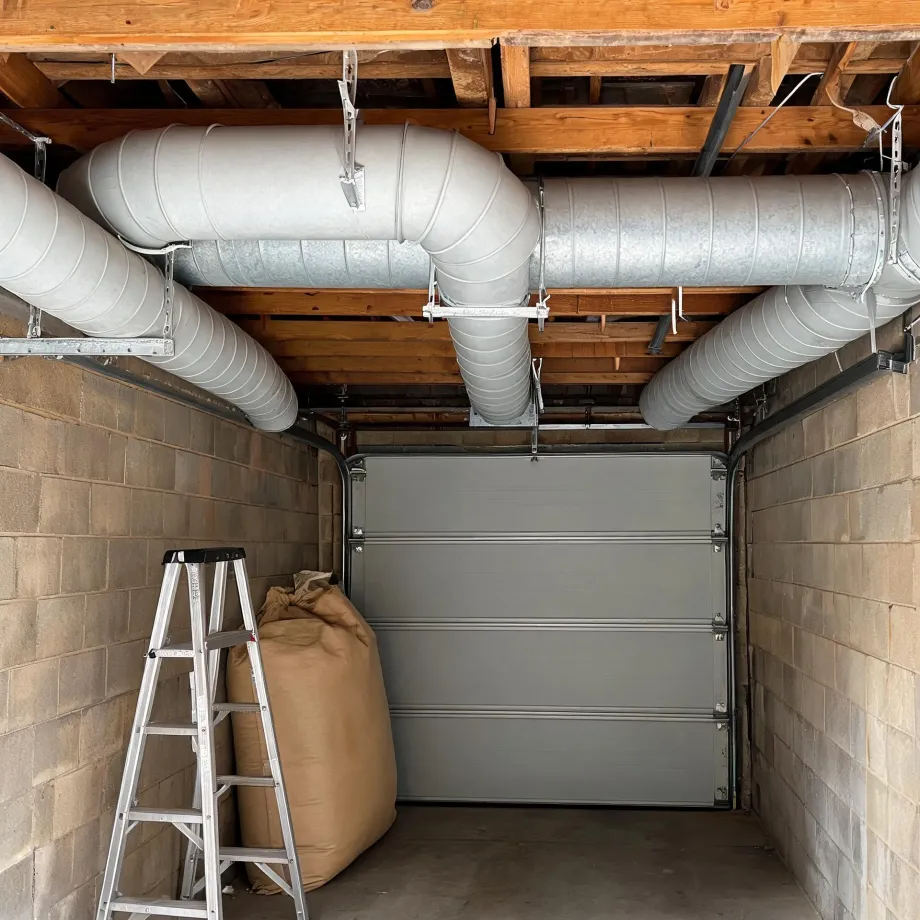
Ductwork laid in for one kind of system does not automatically suit another. Half the homes in Yell County, Arkansas were built in 1984 or earlier (2020-2024 ACS 5-year). A heat pump moves air differently than what most of that stock was originally built around, and a contractor sizing a new unit has to assess whether the existing runs, returns, and connections will carry it before the equipment selection means much. If the ductwork needs correction, that becomes the job. The electrical is the second check, since service panels in houses of that generation were not always sized for the load a heat pump draws.
What a Heat Pump Installation Puts in Your Home
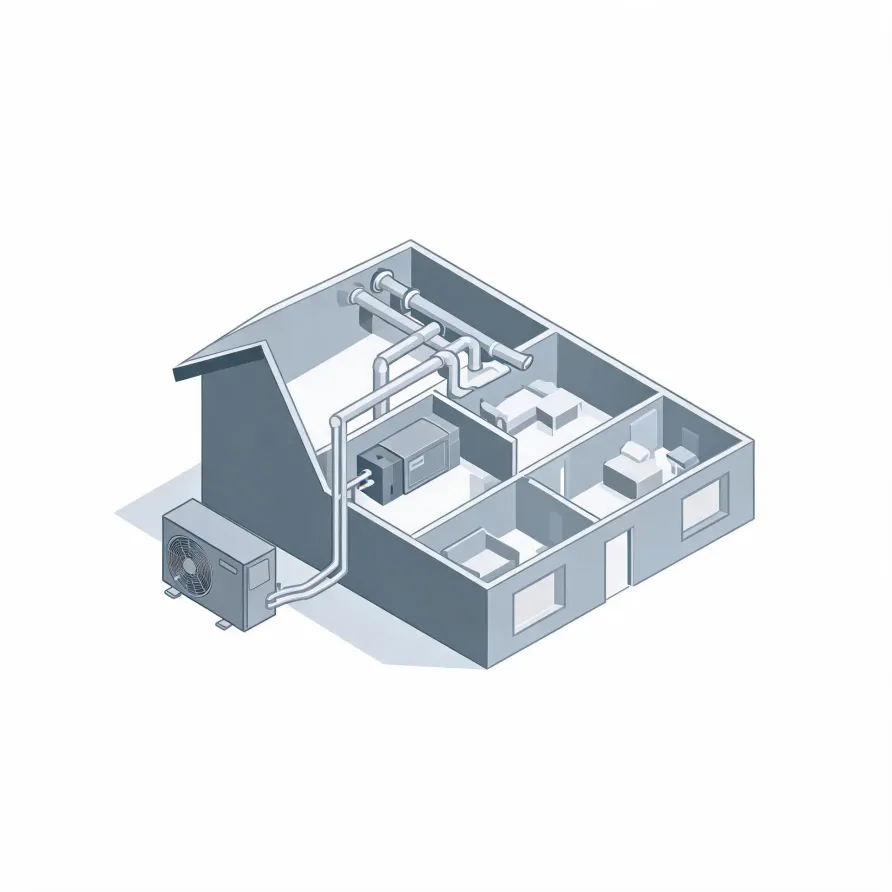
The outdoor unit sits on a pad beside the house and holds the compressor and the heat exchange coil, which are the core of the system. Inside, the air handler mounts in a utility space, a closet, or an attic and moves conditioned air through the home. Together these two cabinets are what a contractor sets in place.
A refrigerant line set runs between the outdoor unit and the air handler, connecting the two with a pair of insulated copper lines. A thermostat goes on an interior wall where it reads the air and signals the system to run. The disconnect box mounts outside near the unit and gives the contractor a safe way to cut power to it.
The drawing shows a representative layout, and a licensed contractor determines what applies to your specific house.
Find a contractor in Yell CountyYell County by the Numbers
66 severe weather events were recorded in Yell County, Arkansas between 2015 and 2024.
NOAA National Centers for Environmental Information, Storm Events Database, bulk CSV export, events 2015-01-01 through 2024-12-31.Half the homes in Yell County, Arkansas were built in 1984 or earlier (2020-2024 ACS 5-year).
U.S. Census Bureau, 2020-2024 American Community Survey 5-Year EstimatesYell County, Arkansas holds 9,312 housing units (2020-2024 ACS 5-year).
U.S. Census Bureau, 2020-2024 American Community Survey 5-Year EstimatesOwners occupy 67.5% of the occupied homes in Yell County, Arkansas (2020-2024 ACS 5-year).
U.S. Census Bureau, 2020-2024 American Community Survey 5-Year EstimatesHeat Pump Installation Rules for Yell County, Arkansas2 sourced standards and codes
Licensing Rules for Yell County, Arkansas
An Arkansas HVACR licence is good across the state: no city or county may require its own licence to do HVACR work, though local permits and inspections still apply.
Arkansas requires an HVACR licence or registration: it is unlawful to do HVACR work without the appropriate one unless the chapter exempts you.
Severe Weather Events in Yell County
Weather puts a load on heating and cooling equipment, and that load is shaped by local conditions. A heat pump sized and installed for what Yell County actually sees will run differently from one built to a generic spec.
66 severe weather events, 2015–2024. Source: NOAA National Centers for Environmental Information, Storm Events Database.