Tell us about the job
Takes about a minute. No obligation.
A heat pump running a full heating season puts real stress on the reversing valve, the refrigerant circuit, and the defrost controls. Homes in Garland County, AR run heat about six months a year, from November through April. The defrost cycle fires repeatedly through those months, and a valve that switches the refrigerant flow each time it does accumulates wear in a way that a summer-only cooling system never will. Contractors diagnosing a struggling heat pump here look at that valve early, because capacity loss in cold weather and a stuck reversing valve produce nearly identical symptoms at the thermostat.
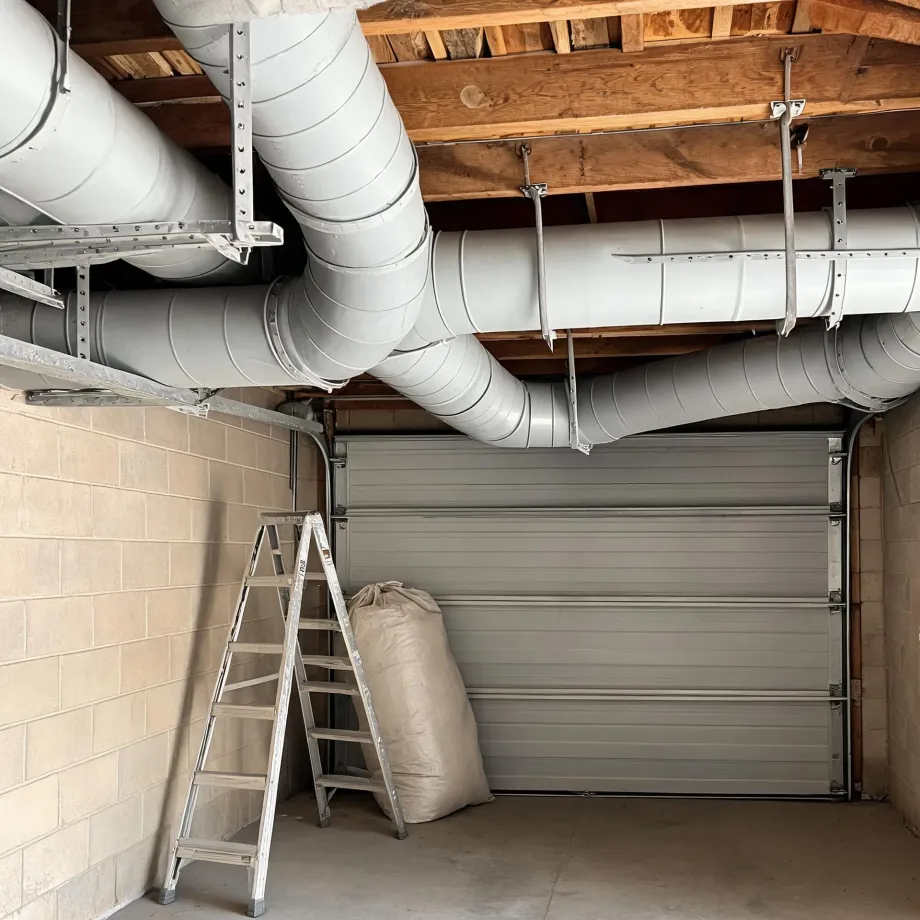
Refrigerant lines and wiring that have lived through more than one equipment generation carry wear that the current unit did not create. Half the homes in Garland County, Arkansas were built in 1984 or earlier (2020-2024 ACS 5-year). When a contractor opens a heat pump in a house this old, what they find in the connections, the line sets, and the service wiring can change both what parts are ordered and how the repair is priced. A component that looks like a straightforward swap sometimes turns out to require upstream work before the new part can do its job.
The Parts of a Heat Pump a Contractor Checks First
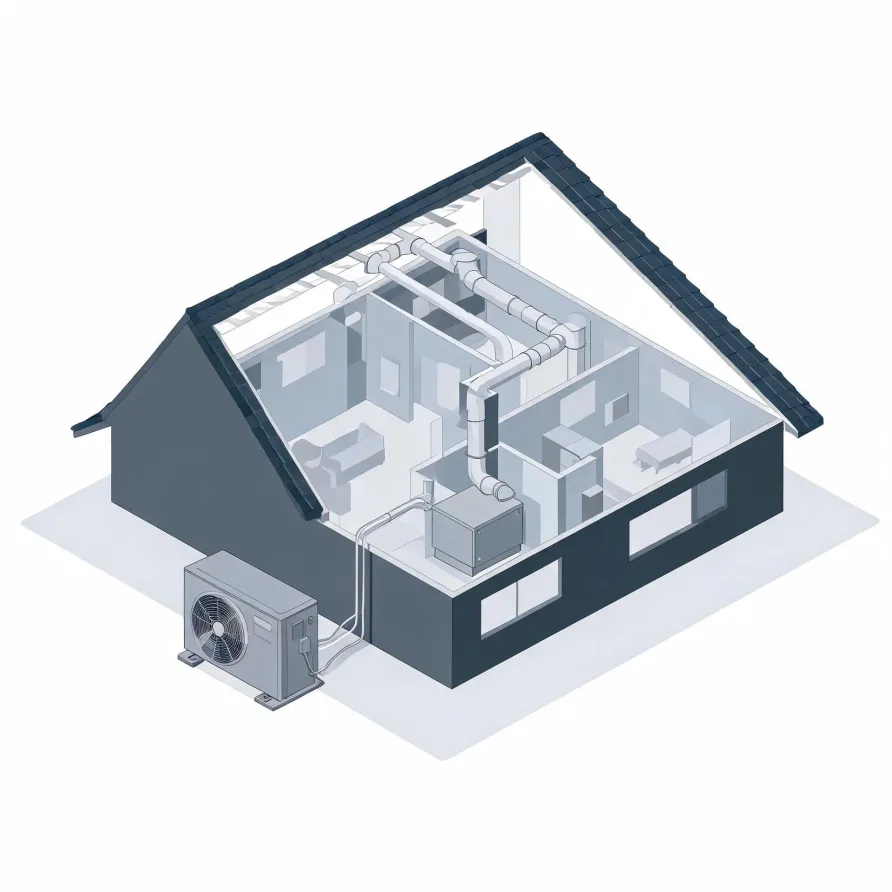
The outdoor unit sits on a pad beside the house and holds the compressor and the condenser coil. The compressor is where most repair calls begin. When it fails, the system runs but moves no heat; when the condenser coil is fouled or bent, the unit overworks until something else gives out.
Inside the house, the air handler holds the evaporator coil and the blower fan, and it pushes conditioned air into the living space. The reversing valve sits in the refrigerant line and is what lets a heat pump both heat and cool. A contractor also checks the expansion valve and the refrigerant lines connecting the two units, since a slow leak in those lines will pull down the whole system.
The drawing shows a typical layout, and a licensed contractor determines what applies to your specific setup.
Find a contractor in Garland CountyGarland County, Arkansas, by the numbers
131 severe weather events were recorded in Garland County, Arkansas between 2015 and 2024.
NOAA National Centers for Environmental Information, Storm Events Database, bulk CSV export, events 2015-01-01 through 2024-12-31.Half the homes in Garland County, Arkansas were built in 1984 or earlier (2020-2024 ACS 5-year).
U.S. Census Bureau, 2020-2024 American Community Survey 5-Year EstimatesGarland County, Arkansas holds 52,760 housing units (2020-2024 ACS 5-year).
U.S. Census Bureau, 2020-2024 American Community Survey 5-Year EstimatesOwners occupy 69.4% of the occupied homes in Garland County, Arkansas (2020-2024 ACS 5-year).
U.S. Census Bureau, 2020-2024 American Community Survey 5-Year EstimatesCodes & Standards Behind Heat Pump Repair in Garland County, Arkansas2 sourced rules & standards
Licensing Rules in Garland County, Arkansas
An Arkansas HVACR licence is good across the state: no city or county may require its own licence to do HVACR work, though local permits and inspections still apply.
Arkansas requires an HVACR licence or registration: it is unlawful to do HVACR work without the appropriate one unless the chapter exempts you.
Severe Weather Events in Garland County
Extreme weather puts real strain on heat pumps, which have to work harder and recover longer after every significant temperature swing or storm. Repair demand in Garland County follows the weather, which is why local conditions matter when sizing up what a system has been through.
131 severe weather events, 2015–2024. Source: NOAA National Centers for Environmental Information, Storm Events Database.