Tell us about the job
Takes about a minute. No obligation.
A heat pump working through an Arkansas winter asks the most of its compressor and reversing valve, both of which cycle harder as outdoor temperatures drop. Homes in Jefferson County, AR run heat about five months a year, from November through March. By the time a homeowner notices a fault, the compressor has likely been laboring through cold snaps that push its capacity toward its lower limit. A contractor pricing a repair here opens with those two components, checks refrigerant charge against what the system was actually running in, and looks at whether the defrost controls have been keeping up.
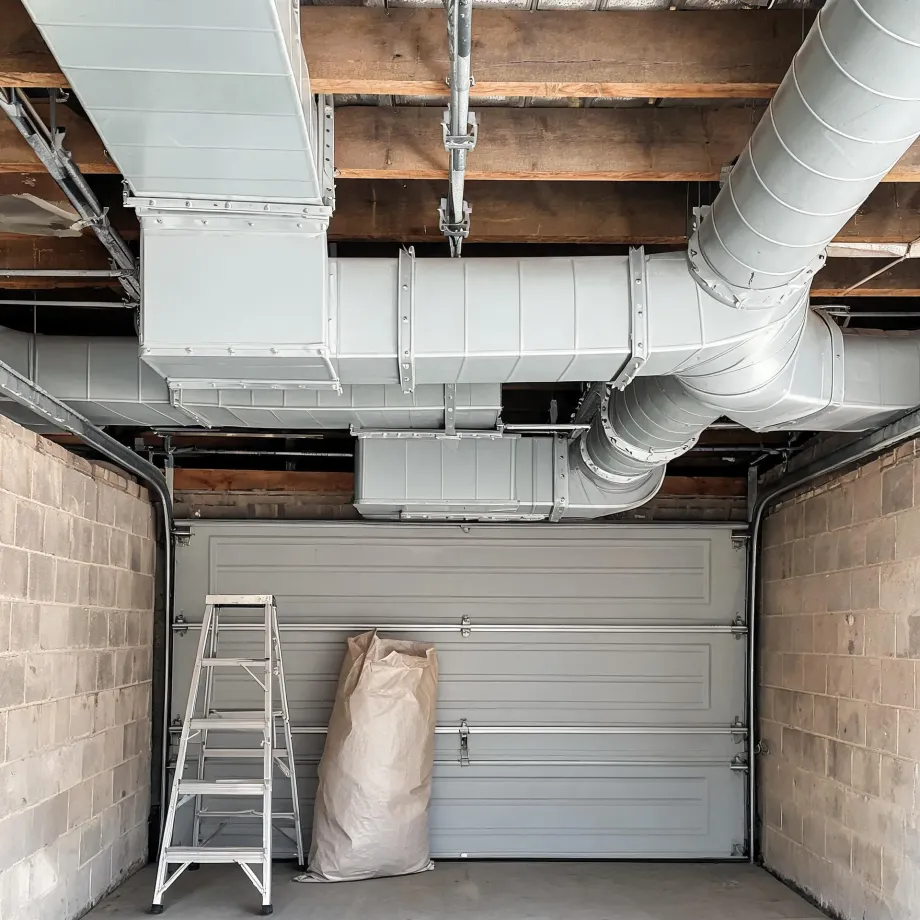
Half the homes in Jefferson County, Arkansas were built in 1978 or earlier (2020-2024 ACS 5-year). A house that old has likely run more than one system in its lifetime, and each transition leaves something behind: wiring spliced to meet a later load, refrigerant lines rerouted around an older path, contactors and capacitors that were replaced with whatever fit at the time. When a contractor opens a heat pump in stock like this, the repair scope is shaped as much by that accumulated history as by the fault that prompted the call. Parts a current unit requires may sit alongside fittings from a previous one, and sorting what belongs to which generation is part of diagnosing the problem correctly.
The Parts of a Heat Pump a Contractor Checks First
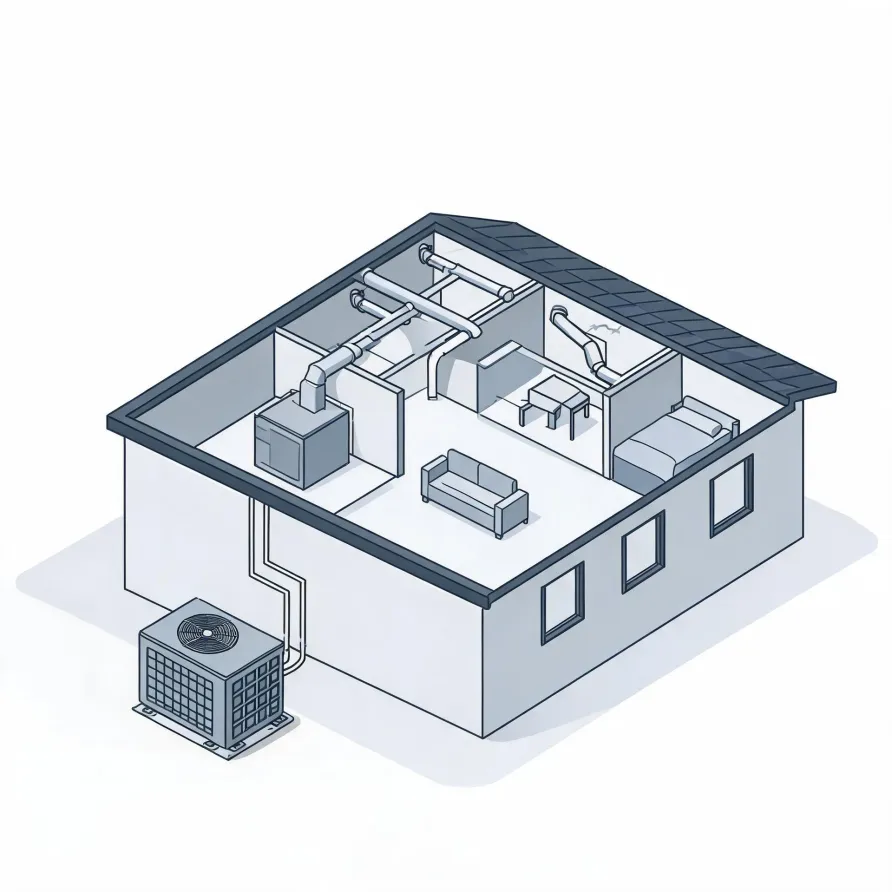
The outdoor unit sits outside the house and holds the compressor and the condenser coil. The compressor is where most repair calls start. When a heat pump loses heating or cooling capacity, or makes hard knocking or grinding sounds, the outdoor unit is where a contractor looks first.
The air handler sits inside, usually in a utility closet, basement, or attic, and it holds the indoor coil and the blower fan. The blower moves conditioned air through the house; the indoor coil is the other side of the heat exchange. The reversing valve, which sits inside the outdoor unit, is the part that lets a heat pump work in both directions, and a failed valve is a common reason a system heats in one season but not the other.
The drawing shows the general layout of a heat pump system, and a licensed contractor determines which components and configurations apply to your specific house.
Find a contractor in Jefferson CountyJefferson County, Arkansas, by the numbers
98 severe weather events were recorded in Jefferson County, Arkansas between 2015 and 2024.
NOAA National Centers for Environmental Information, Storm Events Database, bulk CSV export, events 2015-01-01 through 2024-12-31.Half the homes in Jefferson County, Arkansas were built in 1978 or earlier (2020-2024 ACS 5-year).
U.S. Census Bureau, 2020-2024 American Community Survey 5-Year EstimatesJefferson County, Arkansas holds 30,679 housing units (2020-2024 ACS 5-year).
U.S. Census Bureau, 2020-2024 American Community Survey 5-Year EstimatesOwners occupy 61.8% of the occupied homes in Jefferson County, Arkansas (2020-2024 ACS 5-year).
U.S. Census Bureau, 2020-2024 American Community Survey 5-Year EstimatesCodes & Standards Governing Heat Pump Repair in Jefferson County, Arkansas2 sourced rules & standards
Licensing and Legal Requirements in Jefferson County, Arkansas
An Arkansas HVACR licence is good across the state: no city or county may require its own licence to do HVACR work, though local permits and inspections still apply.
Arkansas requires an HVACR licence or registration: it is unlawful to do HVACR work without the appropriate one unless the chapter exempts you.
Severe Weather Events in Jefferson County
Weather places a real load on heat pump equipment, and that load is not the same everywhere. Repair needs in Jefferson County track the conditions here, which is why local weather history is part of understanding what this equipment faces.
98 severe weather events, 2015–2024. Source: NOAA National Centers for Environmental Information, Storm Events Database.