Tell us about the job
Takes about a minute. No obligation.
A heat pump in Pulaski County works both sides of the year, but the heating cycle is where its components are asked to do the most. Homes in Pulaski County, AR run heat about five months a year, from November through March. Outdoor temperatures during those months push the compressor to work harder to extract heat from colder air, and the reversing valve cycles with every switch between modes. When a contractor opens a unit here for a repair call, worn valve seals and compressor fatigue show up more often than refrigerant problems. Those are the components that carry the heating load, and they reflect it.
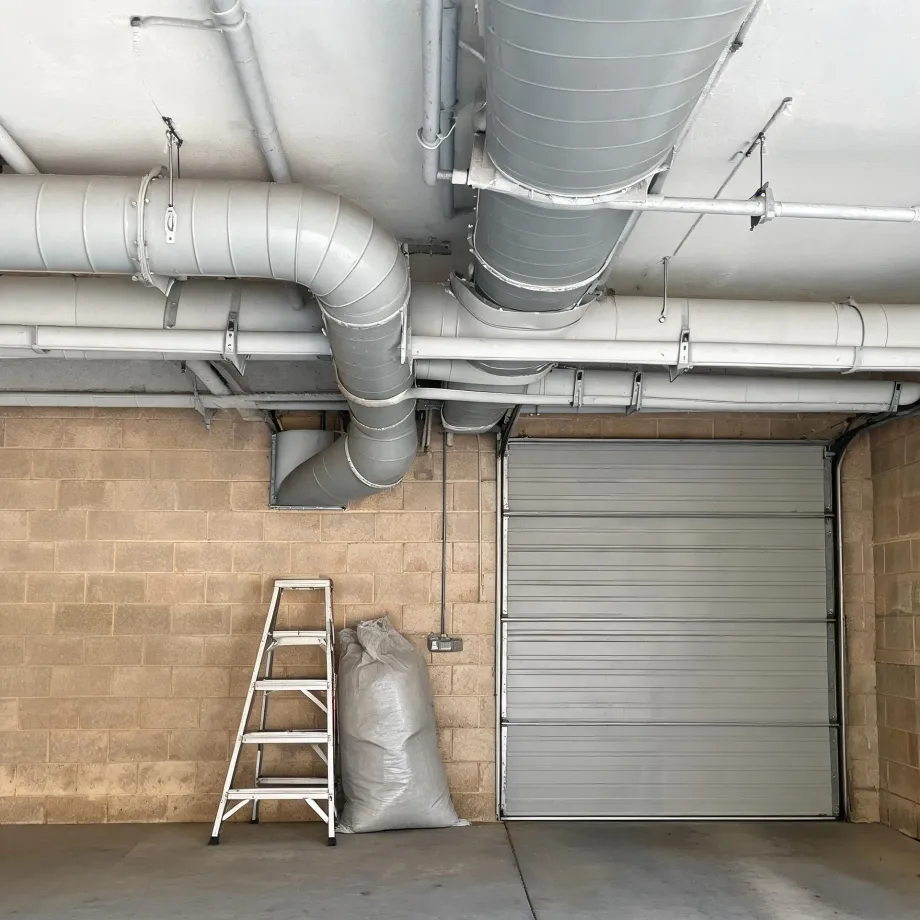
Ductwork that has carried air through multiple equipment generations and refrigerant lines that have been adapted more than once are what a contractor opens on many jobs here. Half the homes in Pulaski County, Arkansas were built in 1981 or earlier (2020-2024 ACS 5-year). A heat pump compressor or reversing valve from a system installed into stock that old draws on parts that manufacturers have phased down or discontinued entirely, and the repair scope follows from what is still obtainable, not from what the original failure looked like. That availability question is settled inside the unit, not from the street.
The Parts of a Heat Pump a Contractor Checks First
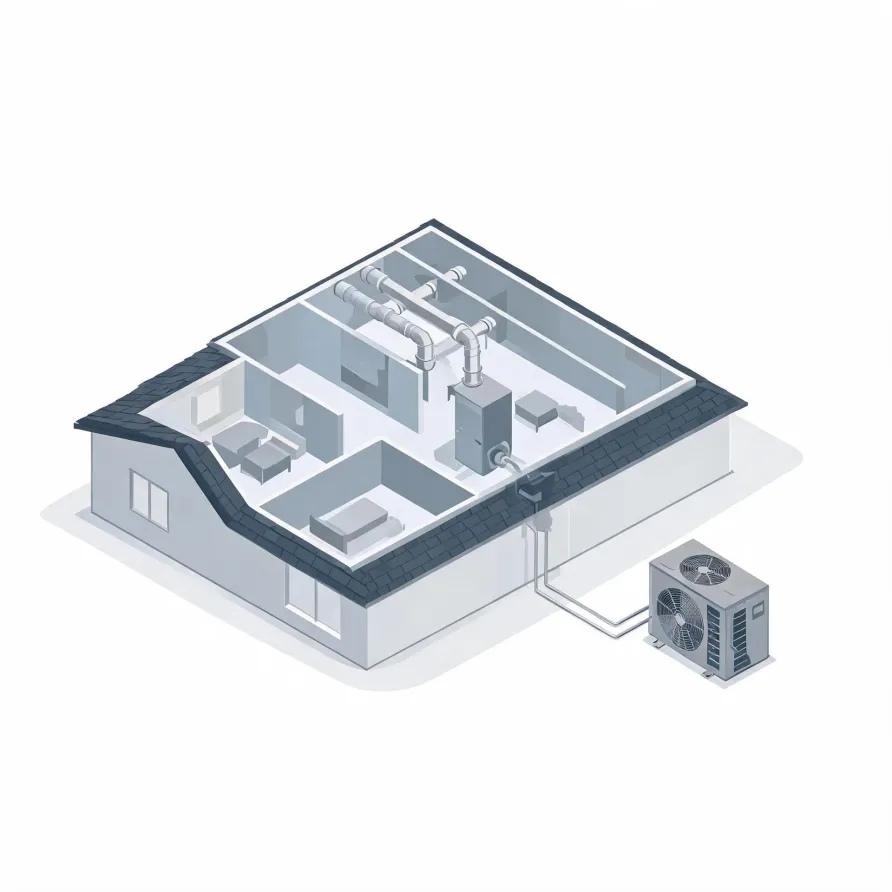
The outdoor unit sits on a pad beside the house and holds the compressor and condenser coil. The compressor is where most repair calls start. When it fails, the system runs but moves no heat. The condenser coil and its fan pull outside air across the refrigerant; a bent coil or a seized fan motor shows up the same way.
Inside the house, the air handler contains the blower motor and the evaporator coil, which together move conditioned air into the living space. The reversing valve sits in the refrigerant line and is what lets the system switch between heating and cooling. The expansion valve and the refrigerant lines that connect both units round out what a contractor traces when the problem is not obvious at a glance.
The drawing shows a typical layout, and a licensed contractor determines which components apply to your specific system and what work each one needs.
Find a contractor in Pulaski CountyPulaski County, by the record
311 severe weather events were recorded in Pulaski County, Arkansas between 2015 and 2024.
NOAA National Centers for Environmental Information, Storm Events Database, bulk CSV export, events 2015-01-01 through 2024-12-31.Half the homes in Pulaski County, Arkansas were built in 1981 or earlier (2020-2024 ACS 5-year).
U.S. Census Bureau, 2020-2024 American Community Survey 5-Year EstimatesPulaski County, Arkansas holds 193,408 housing units (2020-2024 ACS 5-year).
U.S. Census Bureau, 2020-2024 American Community Survey 5-Year EstimatesOwners occupy 57.0% of the occupied homes in Pulaski County, Arkansas (2020-2024 ACS 5-year).
U.S. Census Bureau, 2020-2024 American Community Survey 5-Year EstimatesCodes & Standards Covering Heat Pump Repair in Pulaski County, Arkansas2 sourced rules and standards
Licensing and Legal Requirements in Pulaski County, Arkansas
An Arkansas HVACR licence is good across the state: no city or county may require its own licence to do HVACR work, though local permits and inspections still apply.
Arkansas requires an HVACR licence or registration: it is unlawful to do HVACR work without the appropriate one unless the chapter exempts you.
Severe Weather Events in Pulaski County
Extreme weather puts heat pumps under stress, and the harder a system works to hold a stable temperature, the more likely it is to develop faults. How much strain local weather places on residential equipment is a Pulaski County question, not a national average.
311 severe weather events, 2015–2024. Source: NOAA National Centers for Environmental Information, Storm Events Database.