Tell us about the job
Takes about a minute. No obligation.
A contractor diagnosing a heat pump here has to sort out how much of what they find is a discrete fault and how much is accumulated load on the reversing valve, the compressor, and the refrigerant circuit. Homes in Johnson County, AR run heat about seven months a year, from October through April. Capacity on a heat pump drops as outdoor temperatures fall, so the compressor works hardest exactly when it runs most, and that combination puts the reversing valve under stress that a warmer climate would not produce at the same rate. A part that tests marginal at the start of the season will be gone by February.
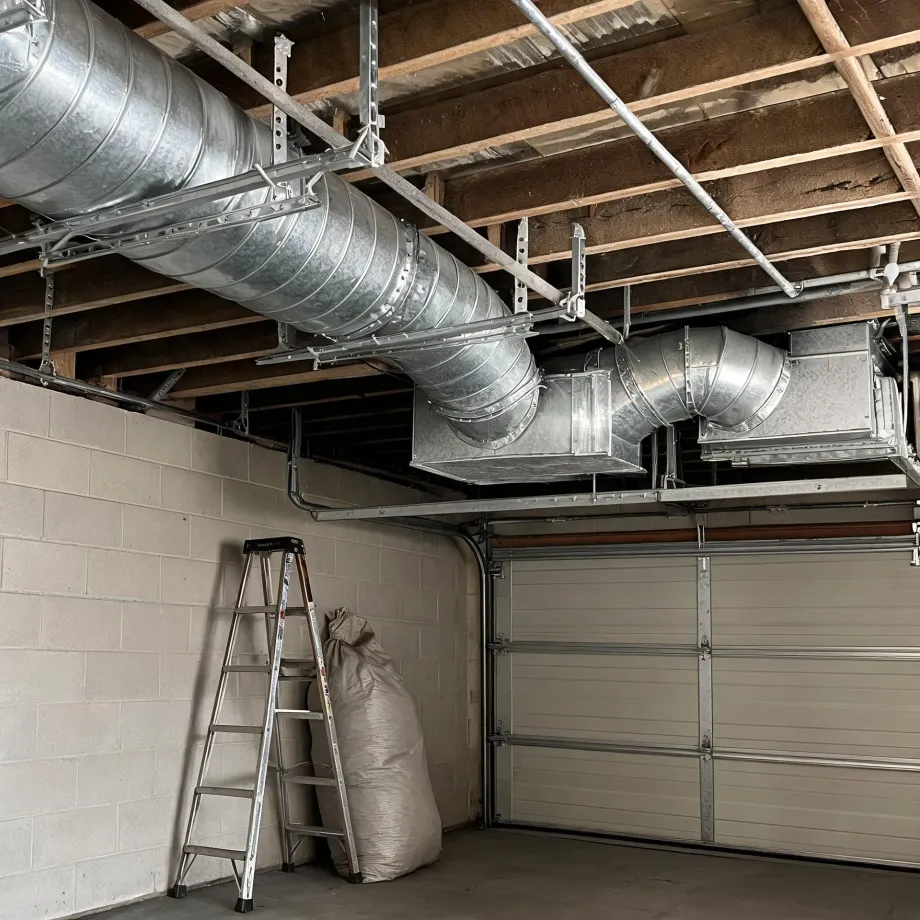
Ductwork in a house this old was sized and routed for whatever system the original builder specified, and the heat pump running in it now has likely been through at least one replacement since. Half the homes in Johnson County, Arkansas were built in 1986 or earlier (2020-2024 ACS 5-year). What that means for a repair is straightforward: once a contractor opens the unit, the question is whether the part it needs is still made. Some components for systems running in housing this old are available; others require sourcing from secondary suppliers or substituting a compatible part. That difference changes the repair timeline and the bill.
The Parts of a Heat Pump a Contractor Checks First
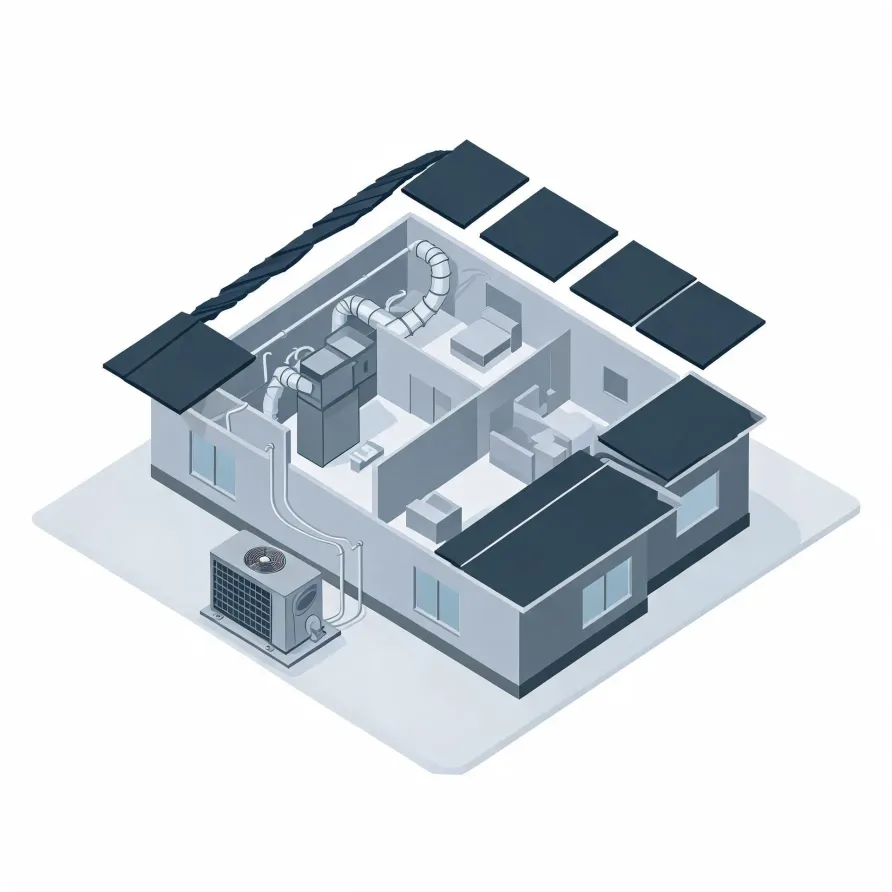
The outdoor unit sits on a pad beside the house and holds the compressor and condenser coil. The compressor is where most repair calls begin. When it fails, the system runs but moves no heat. The condenser coil sits around it, and a bent or blocked coil forces the compressor to work harder than it should.
The air handler lives inside, usually in a utility closet or attic, and holds the indoor coil and the blower fan. The indoor coil can ice over or leak refrigerant, and the blower can wear a belt or a motor. A refrigerant line set connects the two units, and a contractor checks it for leaks at the fittings.
The drawing shows a typical layout, and a licensed contractor determines what applies to your specific system and home.
Find a contractor in Johnson CountyJohnson County, Arkansas, by the numbers
85 severe weather events were recorded in Johnson County, Arkansas between 2015 and 2024.
NOAA National Centers for Environmental Information, Storm Events Database, bulk CSV export, events 2015-01-01 through 2024-12-31.Half the homes in Johnson County, Arkansas were built in 1986 or earlier (2020-2024 ACS 5-year).
U.S. Census Bureau, 2020-2024 American Community Survey 5-Year EstimatesJohnson County, Arkansas holds 11,555 housing units (2020-2024 ACS 5-year).
U.S. Census Bureau, 2020-2024 American Community Survey 5-Year EstimatesOwners occupy 74.1% of the occupied homes in Johnson County, Arkansas (2020-2024 ACS 5-year).
U.S. Census Bureau, 2020-2024 American Community Survey 5-Year EstimatesCodes & Standards Governing Heat Pump Repair in Johnson County, Arkansas2 sourced rules and standards
Licensing and Legal Requirements in Johnson County, Arkansas
An Arkansas HVACR licence is good across the state: no city or county may require its own licence to do HVACR work, though local permits and inspections still apply.
Arkansas requires an HVACR licence or registration: it is unlawful to do HVACR work without the appropriate one unless the chapter exempts you.
Severe Weather Events in Johnson County
Extreme weather puts real hours on heating and cooling equipment, not just during the event but in the recovery cycles that follow. How hard the climate pushes a heat pump shapes how often it needs attention, which makes local weather patterns a repair question, not just a forecast.
85 severe weather events, 2015–2024. Source: NOAA National Centers for Environmental Information, Storm Events Database.