Tell us about the job
Takes about a minute. No obligation.
Sizing a heat pump for this county means working out what the system is actually asked to carry through a long heating half of the year, not just on the coldest days. Homes in Lawrence County, AR run heat about seven months a year, from October through April. As outdoor temperatures drop, a heat pump's capacity drops with them, and the backup resistance heat fills the gap. A contractor who skips a proper load calculation leaves that gap unquantified, which means the backup strips run harder and longer than the equipment budget ever planned for. The refrigerant circuit and the compressor bear the cycling load month after month, and an undersized or poorly matched system shows wear on those parts well before a homeowner expects it.
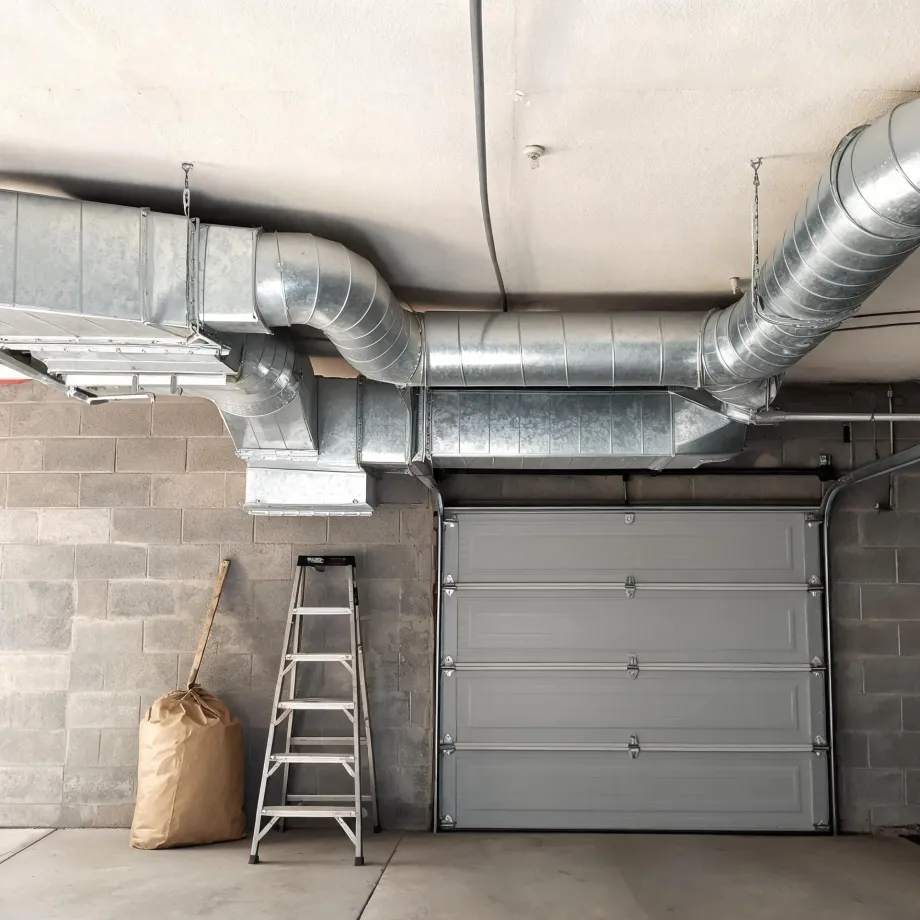
Ductwork in much of this county's housing stock was designed around equipment that has since been replaced, which means the runs, returns, and register placements a contractor finds may not match what a heat pump needs to move air correctly. Half the homes in Lawrence County, Arkansas were built in 1978 or earlier (2020-2024 ACS 5-year). That gap between original design and current demand is where heat pump installation work is won or lost in Lawrence County. A contractor who measures static pressure and checks return capacity before quoting is working from what the house actually has; one who skips it is guessing at fit.
What a Heat Pump Installation Puts in Your Home
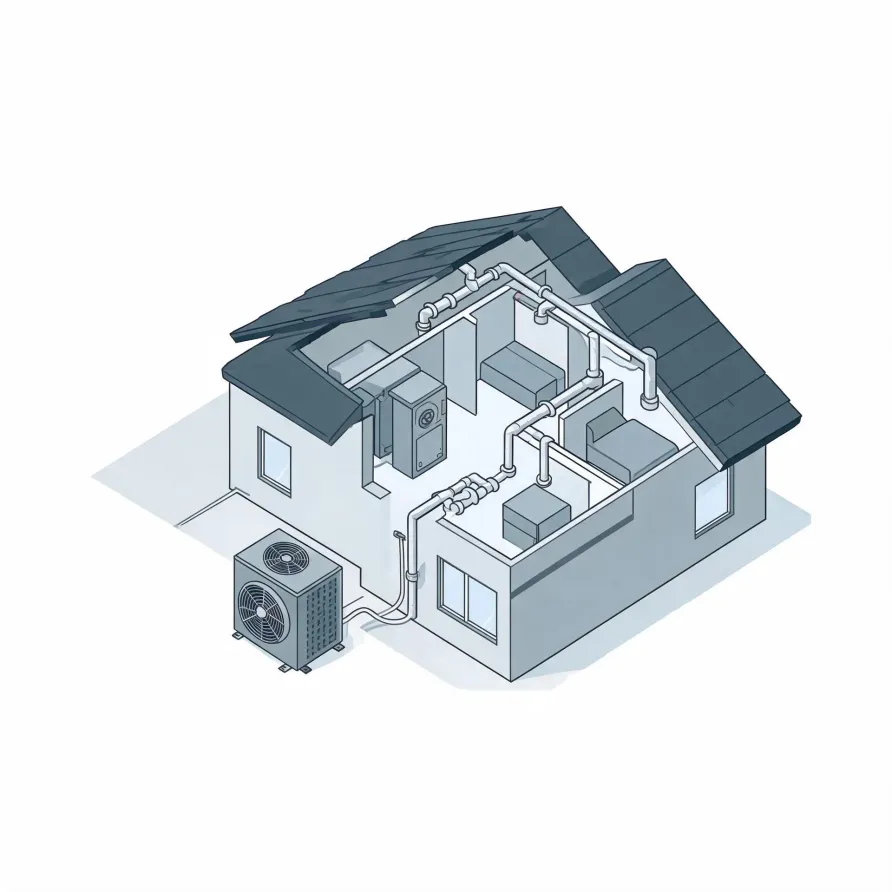
The outdoor unit is the piece most homeowners see first. It sits on a pad beside the house and holds the compressor and the outdoor coil, which together do the work of moving heat between outside air and the refrigerant lines. Inside, the air handler mounts in a utility space, closet, or attic and pushes conditioned air through the home.
A refrigerant line set runs between the two units, carrying refrigerant back and forth through insulated copper tubing. The thermostat mounts on an interior wall and gives the homeowner control over the whole system. Some installations also include a disconnect box near the outdoor unit, which allows the contractor to cut power to that unit safely.
The drawing shows a general layout of these components, and a licensed contractor determines exactly how they come together in your specific home.
Find a contractor in Lawrence CountyLawrence County, Arkansas, by the numbers
97 severe weather events were recorded in Lawrence County, Arkansas between 2015 and 2024.
NOAA National Centers for Environmental Information, Storm Events Database, bulk CSV export, events 2015-01-01 through 2024-12-31.Half the homes in Lawrence County, Arkansas were built in 1978 or earlier (2020-2024 ACS 5-year).
U.S. Census Bureau, 2020-2024 American Community Survey 5-Year EstimatesLawrence County, Arkansas holds 7,644 housing units (2020-2024 ACS 5-year).
U.S. Census Bureau, 2020-2024 American Community Survey 5-Year EstimatesOwners occupy 66.6% of the occupied homes in Lawrence County, Arkansas (2020-2024 ACS 5-year).
U.S. Census Bureau, 2020-2024 American Community Survey 5-Year EstimatesCodes & Standards Governing Heat Pump Installation in Lawrence County, Arkansas2 sourced rules and standards
Licensing and Legal Requirements in Lawrence County, Arkansas
An Arkansas HVACR licence is good across the state: no city or county may require its own licence to do HVACR work, though local permits and inspections still apply.
Arkansas requires an HVACR licence or registration: it is unlawful to do HVACR work without the appropriate one unless the chapter exempts you.
Severe Weather Events in Lawrence County
The weather a heat pump works against shapes how hard the equipment runs and how long it lasts. What happens in Lawrence County is the load a local installation has to handle.
97 severe weather events, 2015–2024. Source: NOAA National Centers for Environmental Information, Storm Events Database.