Tell us about the job
Takes about a minute. No obligation.
Sizing a heat pump for Randolph County requires a contractor to establish how far outdoor temperatures drop at the coldest point of the heating season, because heat pump capacity falls as the temperature falls. Homes in Randolph County, AR run heat about seven months a year, from October through April. The compressor carries the heating load across those months, but it cannot carry it alone when temperatures bottom out, and a system undersized at install leans on backup electric resistance heat to make up the gap. A contractor quoting the job here has to run a proper load calculation before choosing equipment, not after.
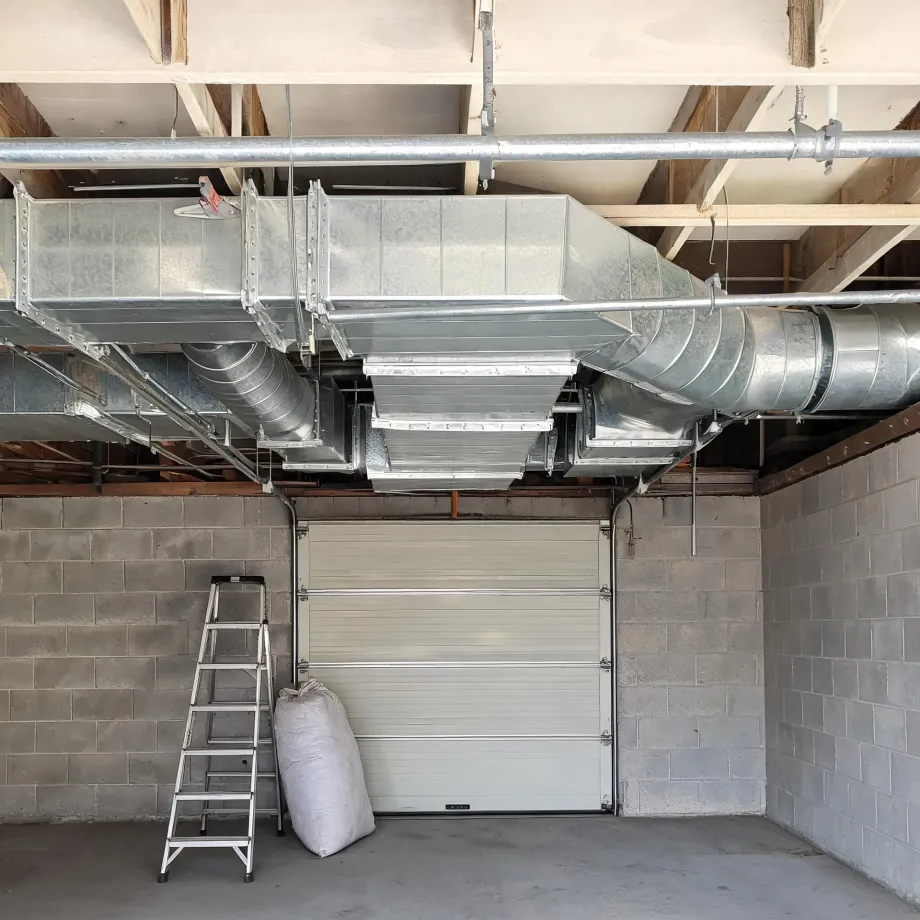
Ductwork laid out for a furnace-and-central-air setup carries air on a different logic than a heat pump requires, and in Randolph County a large share of the housing predates the equipment now sitting in it. Half the homes in Randolph County, Arkansas were built in 1979 or earlier (2020-2024 ACS 5-year). A contractor quoting a heat pump installation here opens the duct runs before pricing the unit, because the routing, the sizing, and the condition of what is already there decides whether the new system will perform or just run. The electrical service gets the same look: older panels were not built around the load a heat pump draws. What the house already contains is where the job is priced.
What a Heat Pump Installation Covers
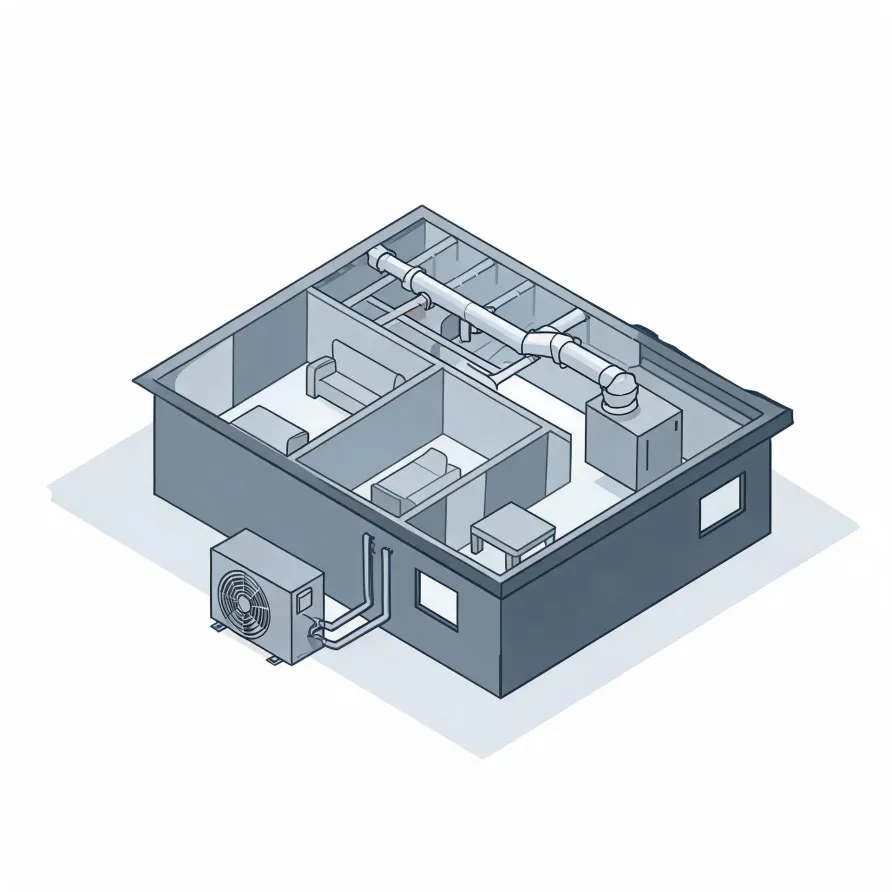
The outdoor unit sits on a pad beside the house and holds the compressor and coil that do the core work of moving heat in or out. Inside, the air handler mounts in a utility space, basement, or closet and pushes conditioned air through the home. Together these two units make up the bulk of what a new installation puts in place.
A refrigerant line set runs between the outdoor unit and the air handler, connecting the two halves of the system through the wall or floor. A thermostat goes on an interior wall where it reads the home's temperature and signals the system to run. The condensate drain line carries moisture from the air handler to a floor drain or outside.
The drawing shows a typical layout, and a licensed contractor determines exactly what applies to this particular house.
Find a contractor in Randolph CountyRandolph County, by the numbers
58 severe weather events were recorded in Randolph County, Arkansas between 2015 and 2024.
NOAA National Centers for Environmental Information, Storm Events Database, bulk CSV export, events 2015-01-01 through 2024-12-31.Half the homes in Randolph County, Arkansas were built in 1979 or earlier (2020-2024 ACS 5-year).
U.S. Census Bureau, 2020-2024 American Community Survey 5-Year EstimatesRandolph County, Arkansas holds 8,656 housing units (2020-2024 ACS 5-year).
U.S. Census Bureau, 2020-2024 American Community Survey 5-Year EstimatesOwners occupy 73.5% of the occupied homes in Randolph County, Arkansas (2020-2024 ACS 5-year).
U.S. Census Bureau, 2020-2024 American Community Survey 5-Year EstimatesHeat Pump Installation Rules for Randolph County, Arkansas2 sourced standards and codes
Licensing and Legal Requirements in Randolph County, Arkansas
An Arkansas HVACR licence is good across the state: no city or county may require its own licence to do HVACR work, though local permits and inspections still apply.
Arkansas requires an HVACR licence or registration: it is unlawful to do HVACR work without the appropriate one unless the chapter exempts you.
Severe Weather Events in Randolph County
Weather puts a measurable load on heating and cooling equipment, and that load is shaped by what the local climate actually does. A heat pump sized and installed for Randolph County conditions works against the same weather record you see below.
58 severe weather events, 2015–2024. Source: NOAA National Centers for Environmental Information, Storm Events Database.