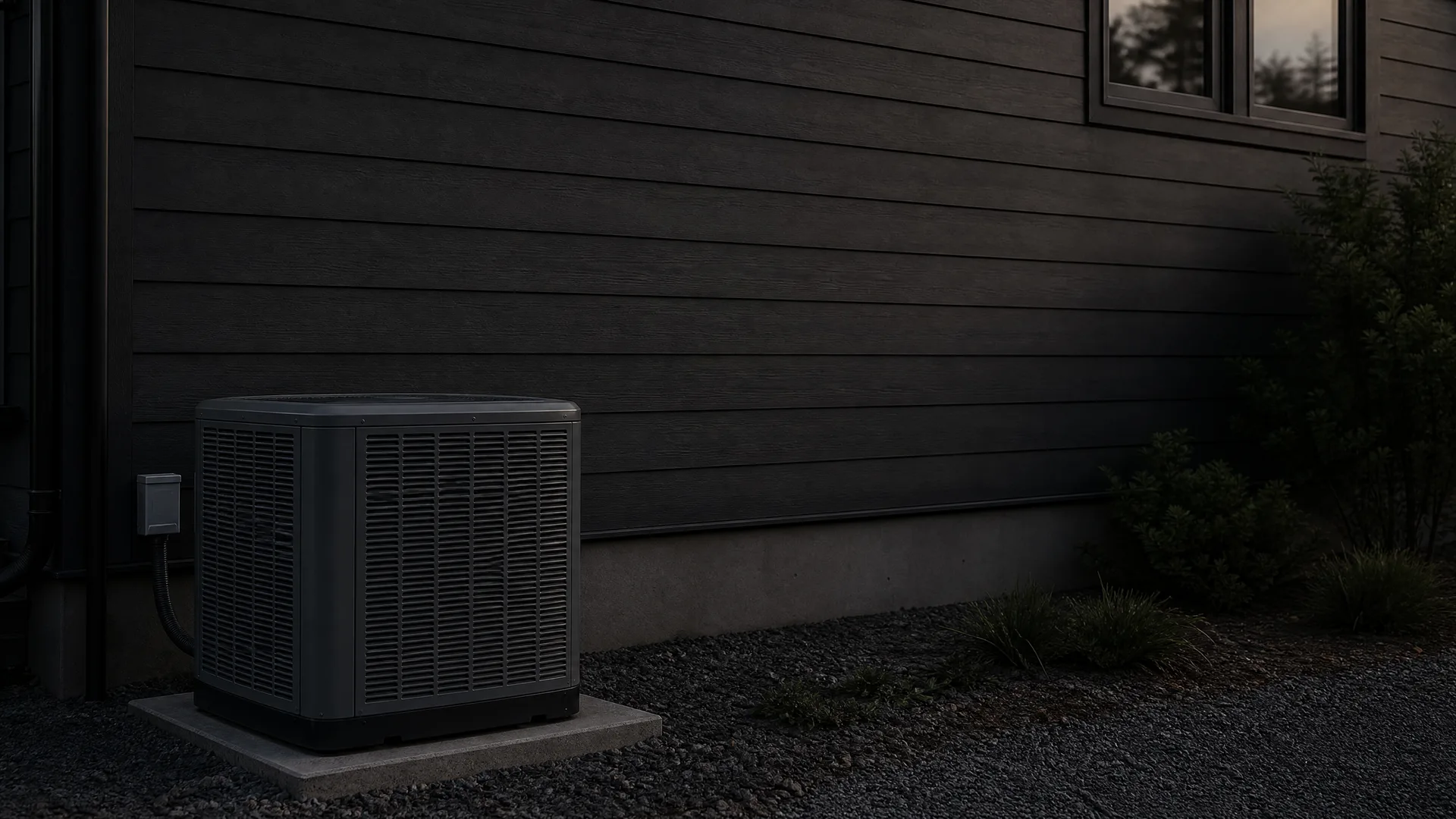
Why your heat pump has ice on it in an Arkansas winter
Send it once and finding someone is no longer on you.
A little frost along the bottom edge of the outdoor unit is normal on a cold Arkansas morning. A heat pump that's caked in ice, with the fan barely turning or not turning at all, is telling you something is wrong.
Your heat pump runs its defrost cycle on purpose. It switches to cooling mode for a few minutes every so often, melts off whatever frost built up, then switches back to heating. If you've seen steam coming off the outdoor unit in January, that's the defrost cycle doing its job. The problem is when that cycle stops working, or stops keeping up, and ice builds up faster than it can clear.
Once that happens, the unit can't pull heat from the outside air anymore. Since most homes in Arkansas heat with electricity, that usually means your backup heat strips take over and keep running, which costs more to operate than the heat pump alone. Left alone, a frozen unit can strain the compressor, and that's the expensive part to replace.
This isn't something to wait out. A unit that's iced over because of a bad defrost control board, a failed sensor, or a low refrigerant charge needs a technician who works on heat pumps all winter, someone who knows which of those is the likely cause before they even open the panel.
Send the request below and the search is done for you. It goes to one licensed contractor working near you in Arkansas, not a handful of companies competing for your callback. No more digging through listings while your house runs on backup heat. That part of this is off your plate now.
Why is my heat pump covered in ice in winter?
You went out to check on the unit during a cold snap and found it covered, not just dusted at the bottom but iced over on the coil and sides, with the fan struggling or stuck. The hero already told you a little frost at the base is normal. This is past that, and you want to know what's actually going wrong before you decide what to do about it.
The defrost cycle isn't keeping up, or it isn't running at all
Your heat pump is built to ice up a little and melt it off on its own several times a day. Heavy ice means that cycle stalled. A stuck reversing valve, a failed defrost sensor, or a low refrigerant charge are the usual reasons the unit stops switching into defrost on schedule. Sometimes it's simpler: the outdoor fan motor is weak or seized, so the coil never gets the airflow it needs to shed frost between cycles. Arkansas winters swing cold enough overnight to load the coil with frost fast, so a system that's already struggling doesn't get a break before the next freeze hits. Left alone, the ice packs in tighter, the coil can't absorb heat from the outside air, and the unit works harder for less warmth in your house.
Arkansas already had a cold week this January, and the heat hasn't kept up. You're in bed at midnight with another blanket pulled over the one that's already there, and your feet are still cold. The vents are blowing, you can hear the air moving, but it feels thin, barely warm at all. You get up and go to the window, and through the glass you can see the outdoor unit in the side yard, and even in the dark you can tell something's wrong with it. The whole coil is white. The fan isn't moving. You stand there a minute in your socks on the cold floor, watching it, before you go back to bed still cold.
A thin white edge at the bottom of the coil, fan spinning, melt water dripping onto the pad: your heat pump is just cycling through a normal defrost.
Ice climbing the coil, frost locking the fan blades, no runoff on the pad: your heat pump is losing the fight and needs a repair call.
A heat pump defrosts by reversing itself for a few minutes, sending heat outside to melt the coil, then switching back. That's why the air feels cool during a defrost cycle.
If it can't complete that reversal, the ice stays and builds with every cycle. By the next cold morning, the coil is sealed and the fan can't turn at all.
A heat pump stuck in a half-finished defrost won't fix itself by morning. Once ice has locked onto the fan or climbed the coil, running the system harder only adds frost to frost. Most Arkansas homes here heat with electric heat pumps, and electricity is cheap, so people tend to just let the thermostat run and wait it out. That's the wrong move when a reversing valve or a defrost control is the actual problem. A local contractor who works on heat pumps all winter has seen this exact failure before, on this exact brand of unit, in this exact cold snap, and knows which part usually gives out first. Send the request and that search becomes someone else's job instead of yours. You stop standing out by the unit in the cold trying to guess what's wrong, and get back to the part that matters: a working heat pump and a warm house tonight.
The coil is clean and the fan turns freely
Mulch and grass around the pad, a trimmed lawn, nothing blocking the sides. Air moves through the fins and out the top without a fight. A unit kept like this can run its defrost cycle and come right back to heating your house.
The fins are caked and the airflow is choked
Dirt and grime built up on the fins slow down how much air the unit can pull through. A heat pump already working that hard in the cold has less margin left to finish a defrost cycle before ice gets ahead of it.
Power costs 12.87 cents per kilowatt-hour statewide
At 12.87 cents a kilowatt-hour, a heat pump that can't shake its ice and falls back on backup heat strips runs up your bill fast. Clearing the ice and getting the defrost cycle working again is what keeps that electric heat affordable this winter.
EIA-861 2025 statewide residential average
Ice Means the Cycle Stalled
Light frost on a cold morning is normal; a coil caked in ice with a stuck fan means the defrost cycle isn't finishing.
Running the system harder while it's iced over just adds more frost and leans on backup electric heat strips instead of fixing anything.
Clear airflow around the outdoor unit and a coil free of debris give the defrost cycle its best shot at working on its own.
Once ice has locked onto the fan blades, the unit needs a technician to clear it and find out why the cycle stalled.
A technician who services heat pumps through Arkansas winters every year has already seen what usually causes a stalled defrost cycle.
Sending one request means one licensed local contractor looks at your unit, not a string of callbacks from companies you didn't choose.
A little frost at the bottom of the unit on a cold Arkansas morning is nothing. A coil caked in ice with the fan stuck or barely moving means the defrost cycle started and didn't finish. That's the whole answer. Everything else is about what to do with it.
Running the system while it's iced over doesn't help. It just piles frost on frost and pushes the work onto the backup heat strips, which cost more to run than the heat pump itself. Keeping the area around the outdoor unit clear and the coil free of leaves or debris gives the defrost cycle the best chance of finishing on its own. Once ice has locked onto the fan blades, that chance is gone, and the unit needs someone to clear it by hand and figure out why the reversing valve or the defrost control didn't do its job.
That's work for a technician who's already spent this winter, and past ones, on heat pumps built to handle Arkansas cold. Someone local who's seen a dozen stalled defrost cycles this season alone knows the usual places to check first: the sensor, the control board, the valve itself. Send one request and one licensed contractor from your area takes a look. Not three companies calling back, not a bidding war, just the person who actually knows this equipment coming to find out what stopped your unit from doing what it's built to do.
It's off your list after this
Your request goes to one pro, not a list of companies.