Running the way it should
The coil is clean and open, so air moves through it the way it was designed to. A unit kept clear like this holds its efficiency and doesn't force the compressor to work past what it has to.
 Hand it off
Send the request and finding a pro stops being your problem.
A heat pump in Rogers works harder than almost any other part of your house. It carries you through muggy summers and then flips over to carry you through cold winters, with no real break in between. That double duty wears on a system faster than people expect, and it's why the question of replacing it comes up more here than in places with a milder climate.
Age alone doesn't tell you much. What matters more is how the unit is behaving right now. If it's running longer cycles to hit the same temperature, if your power bill has crept up without another explanation, or if a contractor has already been out more than once this year for the same complaint, those are signs the system is losing ground rather than just having an off week.
Repairs can make sense for a while. But a heat pump nearing the end of its life tends to fail at the worst time, usually during the first real cold snap or the first stretch of July heat, because that's when it's working hardest. Knowing where your system stands before that happens means you get to make the decision instead of having it made for you.
If you're at the point of weighing repair against replacement, the next step is getting a straight answer from someone who looks at these systems every day in Benton County and knows what tends to go first in this climate. Once you send in your information, you're done chasing anyone down. A local, licensed contractor takes it from there, and you're not stuck fielding calls from a half dozen companies trying to win the job. Just the one contractor, already familiar with what heat pumps around here run into, looking at your situation.
Most heat pumps last between 10 and 15 years, and in Rogers, where the system runs for heating and cooling almost year round, that wear adds up faster than it would somewhere with a true off season. If yours is in that range and you're seeing higher bills, rooms that don't hold temperature, or repairs that keep coming back, replacing it is usually the better move over sinking more money into a system that's breaking down. Age isn't the only sign. A heat pump that ices over heavily in winter and doesn't clear in defrost, or one that runs constantly without keeping the house comfortable, is telling you the same thing even if it's younger. Check the age against when your system was installed, not when the house was built, since those aren't always the same. Past that point, a new heat pump will run more efficiently and keep up with Benton County's swings between humid summers and hard winters far better than an aging one straining to do both.
Winter nights average 28°F
Nights this cold make the system lean on its backup heat strip more often, and that pulls more power than the compressor alone.
Heat runs October through April
Twelve months of the year, it's either heating or cooling. The short gaps in spring and fall are the only rest it gets.
Cooling runs May through September
Add the two together and there's barely a month where the unit sits idle. That's most of why one wears out sooner here.
NOAA nClimDiv 1991-2020

The coil is clean and open, so air moves through it the way it was designed to. A unit kept clear like this holds its efficiency and doesn't force the compressor to work past what it has to.

When the fins clog like this, the coil can't shed heat properly and the system runs longer to do the same job. Left this way, it drives up the power bill and shortens what life the unit has left.




A licensed installer who works in Benton County gets your project.
After this form, you can stop searching for a heat pump pro.
You only hire the pro if you want to.

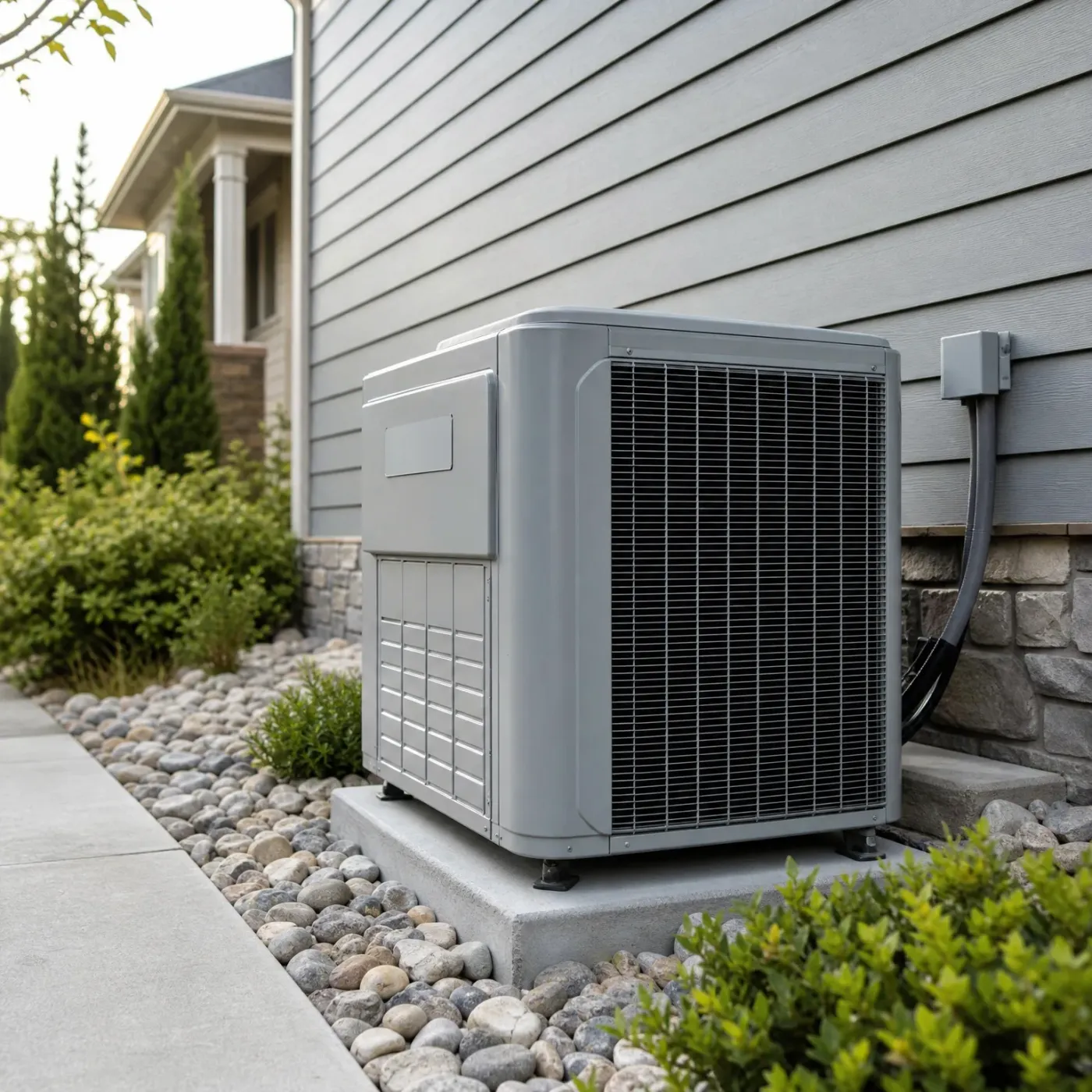
This is a heat pump keeping up with its workload. The pad is level, the lines running up to the disconnect are intact, and the unit cycles on and off without strain. A system like this is holding its own against Rogers summers and winters, whatever its age.

Nothing here looks damaged, but a unit working this hard shows it other ways: longer run times, a compressor that strains to start, rooms that stay warm in July or cold in January no matter what the thermostat says. That strain is what pushes a unit toward the end of its 10 to 15 years, not how it looks sitting on the pad.
At 12.77 cents a kilowatt-hour, an aging heat pump's lost efficiency shows up fast on your bill. A unit leaning on its backup strip more than it used to will pull noticeably more power than one running clean, even at that rate.
EIA-861 2025
A heat pump in Rogers doesn't get a season off, so the wear that shows up at year 10 or 12 is real, not early. If yours is in that range and the power bill has been creeping up, or it's running the backup strip more than it used to, that's the system telling you it's losing ground. Age on its own isn't the full story. A unit that's 11 years old and running clean, with a coil that's still open and a bill that's held steady, can keep going. The same age paired with a rising bill is a different situation. A single part failing, a capacitor or a contactor, on a younger unit is normally worth fixing rather than replacing, especially if the compressor is still sound. What shortens a system's life faster than the calendar is strain, a coil choked with dirt, a compressor working past what it should have to. That kind of wear can take years off a unit that otherwise had several left in it. None of this is a guess you have to make alone. Someone who services this equipment in Rogers every summer and every winter knows what a unit at this stage usually needs, and can tell you, standing in front of it, whether you're looking at a repair or a replacement. That's a better answer than the age of the unit by itself can give you.


Send one request and you're done looking
The pro who gets in touch is licensed in Arkansas and works in Benton County.
