





What auxiliary heat means on an Arkansas heat pump

Step 1 of 3: Equipment

Auxiliary heat is the backup heat strip that kicks in when your heat pump can't pull enough warmth out of the cold outside air on its own. You'll usually see "AUX" or "EM HEAT" light up on the thermostat when it runs. On a heat pump, that backup is electric resistance heat, like a giant toaster coil, and it costs more to run than the heat pump itself because it makes heat instead of moving it. It kicks on during the coldest stretches of an Arkansas winter, and also when the system is struggling, like when the coils have iced over or the unit is low on refrigerant. If you see AUX come on during mild weather, that's not normal and it usually means the heat pump itself isn't keeping up. That's worth having looked at before it runs up your bill or leaves you stuck on backup heat all winter.

An outdoor condenser unit encased in thick ice stands on snow beside a house with horizontal siding and exterior pipes, with bare trees and a sunset glow in the background.

You walk out to the side yard a little before seven, coffee still in hand, and the cold hits you first. Then you see it. The outdoor unit is coated in ice, thick over the coils, a crust of it climbing the side panel. Frost like this after a hard January night isn't unusual on its own. What stops you is that the fan isn't turning and the unit is dead quiet. Inside, the thermostat reads AUX, and it's been reading that for a while now. The house feels warm enough. But standing here looking at the ice, you're doing the math on what this month's bill is going to look like.

Normal Aux Use or a Sign of Trouble

Aux heat running normally

  • The light comes on during a hard freeze, runs for a while, and goes off once the house warms back up.
  • It cycles off when the outdoor temperature climbs back above the point where the heat pump alone can keep up.
  • The outdoor unit may carry frost on a cold morning, but it clears on its own once the sun's up or the unit defrosts.
  • Your electric bill runs higher in the stretch of days it was working hardest, then settles back down.
  • The thermostat shows AUX only on the coldest days, not every time the heat kicks on.

Aux heat signaling a problem

  • The AUX or EM HEAT light stays on all the time, even on a mild day in the 50s.
  • The outdoor unit is caked in ice that doesn't melt off by afternoon, past a normal morning frost.
  • The house never quite reaches the temperature you set, no matter how long the system runs.
  • Your power bill jumps well beyond what a cold snap would explain, and stays high after the weather breaks.
  • The heat pump runs constantly outside without the air inside ever feeling warm.
  • The system switches to EM HEAT on its own and stays there, which means it's running on strip heat alone with the heat pump doing nothing.
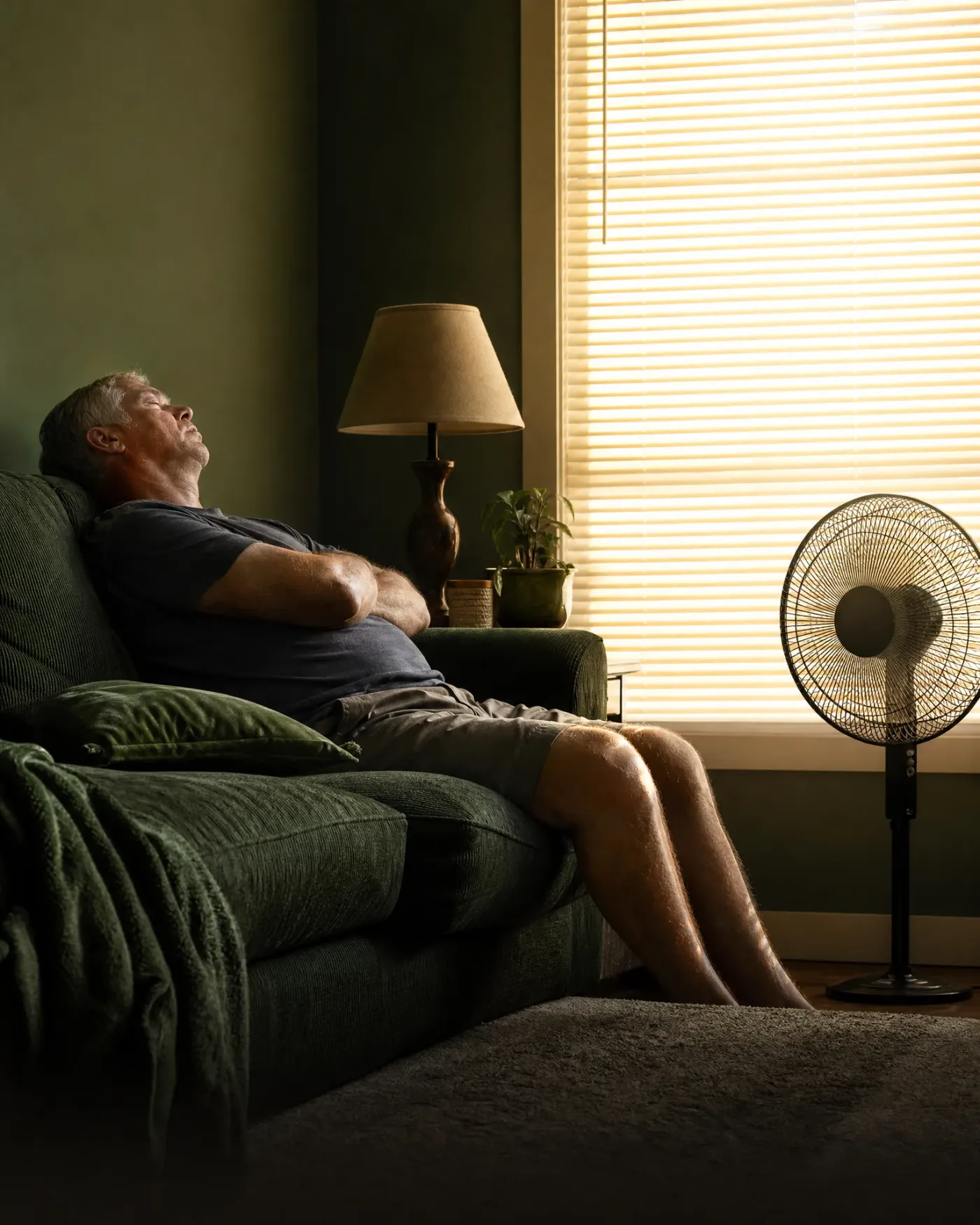
A gray-haired man in a dark long-sleeve shirt sits on a gray sofa in a living room, looking toward a sunlit window with sheer curtains.
A gray-haired man in a dark green sweatshirt sits on a sofa in a living room, looking toward a bright window, with a houseplant, lamp, fireplace and framed art behind him.
A gray-haired bearded man in a dark green collared sweater sits on a sofa in a living room with a window, houseplant, floor lamp and bookshelves, looking off to the side.
A gray-haired man in a dark green sweater sits on a sofa in a sunlit living room, looking off to the side, with a framed landscape painting, dining table and shelving behind him.

Why has your power bill jumped since the cold snap

You notice it on the bill first, usually, before you notice it on the thermostat. A bill that's a lot higher than last month, with nothing else in the house different. Go check the thermostat during the next cold stretch and you might see AUX or EM HEAT lit up and staying lit, running for long stretches instead of cycling on and off. You might also notice the air coming out of the vents feels cooler than you'd expect for how hard the system is working, or the outdoor unit is iced over past what a normal frost would do. None of this means the system is broken outright, but aux heat that won't shut off is pulling a lot more power than your heat pump should need, and left alone through a cold Arkansas winter, that adds up fast.

A gray outdoor condenser unit on a concrete pad beside a house with horizontal lap siding, a conduit and disconnect box on the wall, a shrub with white flowers at right and evergreen foliage at left.

Aux heat cycling as it should

This is what a heat pump looks like most of the time, sitting on its pad doing the job. Aux comes on during a hard freeze, warms the house back up, then shuts off, and the outdoor unit goes back to running on its own. No ice, no long runtime, nothing to call anyone about.


An outdoor air conditioning condenser unit with a top fan grille sits on a concrete pad beside a house with horizontal siding and a concrete step.

Aux heat stuck or overworked

A coil caked like this can't pull heat from the air the way it should, so aux carries more of the load than it was built for. If yours is running for hours at a time or staying lit no matter what the thermostat reads, something's keeping the heat pump from doing its share, and that's worth a look.

Why does aux heat come on before the heat pump itself gives up

You see the AUX light come on during a cold snap and wonder why it's running when the outdoor unit doesn't look frozen or broken. It seems like backup heat should only kick in once the heat pump has already failed to keep up, but that's not how the thermostat is actually deciding to turn it on.

It's triggered by the thermostat's setpoint, not by the heat pump failing

A heat pump loses capacity as the outdoor temperature drops. It can still make heat at 25 degrees outside, just less of it per hour than it can at 45. If the house is losing heat faster than the heat pump can replace it, the indoor temperature drifts below the setpoint. The thermostat has a second stage built in for that. Once the gap between the setpoint and the actual temperature passes a couple of degrees, it calls for aux heat to make up the difference. The heat pump keeps running the whole time. Aux is added on top of it, not swapped in for it. That's why it can come on well before anything is wrong with the outdoor unit.

A woman with shoulder-length dark brown hair in a cream knit cardigan sits in an upholstered armchair beside a window, looking off to the side, with a white bookshelf and potted plant blurred behind her.
A woman and a child wrapped together in a thick knitted blanket on a sofa, both with eyes closed, with a lit table lamp and houseplant in the dim background.

Explain it one time

The pro who reaches out is licensed in Arkansas.

Sending the form costs nothing.

How aux heat actually works

  • The outdoor unit has a thermostat-controlled balance point, the outside temperature where it can no longer keep up on its own.
  • A defrost cycle reverses the heat pump for a few minutes to melt ice off the coil, and aux heat often runs then to keep cold air from blowing inside.
  • The thermostat has two stages: one calls for the heat pump, the second calls for the strips when the house falls further behind the set temperature.
  • Heat strips sit in the air handler, not the outdoor unit, so aux heat warms the air after it's already inside the house.
  • A stuck contactor or a bad defrost control board can force aux heat to run constantly instead of only during a cold snap.
  • Some thermostats let you force emergency heat by hand, which runs the strips only, with the heat pump shut off completely.

A heat pump moves heat from outside air into your house, and it does that job down to a certain outside temperature, the balance point, set in the outdoor unit's control. Below that, the thermostat calls for a second stage, and that's the heat strips. Those strips aren't outside. They sit inside the air handler, so the heat pump still pulls what warmth it can from the cold air, and the strips finish the job once that air is already inside the duct. You'll also see aux heat kick on during a defrost cycle. Every so often in freezing weather, the outdoor unit briefly runs in reverse to melt frost off the coil, and for those few minutes it's pulling heat from inside the house, not adding any. Aux heat covers that gap so you don't feel a blast of cold air out of the vents while it defrosts. Most of the time this is all working the way it should, a short run during a cold snap or a defrost cycle, then back to normal. If the AUX light stays on for hours regardless of outside temperature, that's usually a stuck contactor or a bad defrost control board making the system think it needs backup when it doesn't. Some thermostats also have an emergency heat setting you can select by hand. That shuts the heat pump off entirely and runs on the strips alone, which is meant for when the outdoor unit itself is down.

Power costs 12.87 cents per kilowatt-hour statewide

At 12.87 cents a kilowatt-hour, running aux heat for a few hours during a freeze costs real money, but it won't wreck your bill the way it would somewhere with pricier power. What drives the cost up is aux heat running for days because something else is wrong, not the strip itself turning on.

EIA-861 2025 statewide residential average

A beige outdoor air conditioning condenser unit on a concrete pad beside a house with horizontal vinyl siding, with refrigerant lines and a disconnect box on the wall, surrounded by dark mulch and a green shrub at left.
Aux kicks on during a freeze, heats the house, and shuts off once the heat pump can keep up alone.
An outdoor air conditioner condenser unit on a concrete pad beside a house with horizontal lap siding, with a shrub to the left, bare dirt in front, and conduit and a metal disconnect box on the wall.
Aux running nonstop, no cycling, means the heat pump stopped carrying its share and something needs a look.
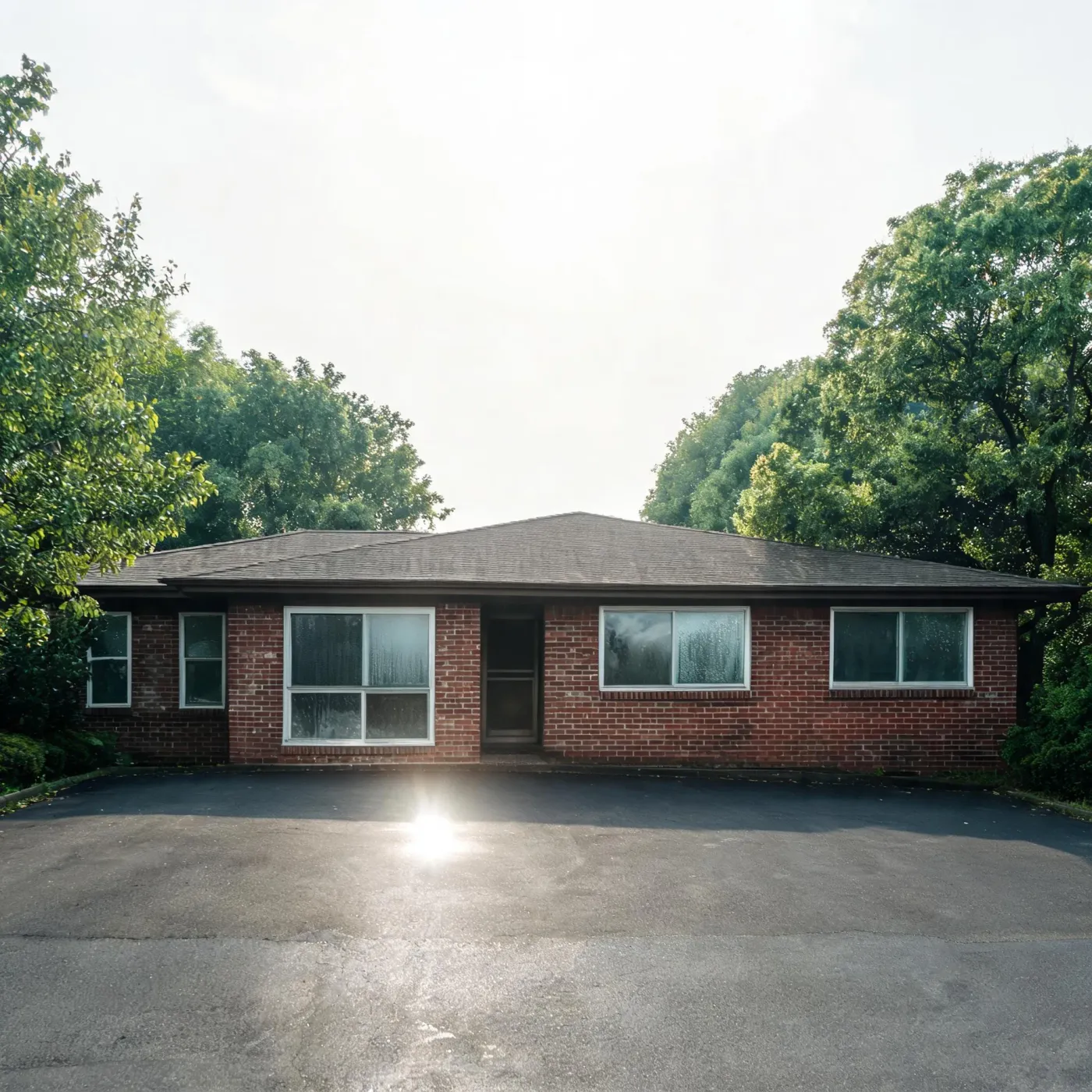
A single-story red brick building with a shingled hip roof, large windows and a recessed central entry, fronted by a wide empty asphalt parking area with sun glare, surrounded by green deciduous trees.

That heavy, sticky air you get here in July and August runs a summer dew point of 68°F, and it changes how hard your heat pump works in the opposite season too. A coil that's been pulling moisture out of that thick summer air all season is doing more work year round, and the same system that struggles against humidity in July is the one pulling cold air apart for heat in January. If the outdoor coil is dirty or low on refrigerant going into winter, aux heat runs longer than it should, not because the cold is unusual but because the heat pump isn't working the way it's supposed to. Source: NOAA climate normals.

NASA POWER T2MDEW county cells weighted by homes

A closed silver laptop and a white cup of coffee on a saucer sit on a wooden table in front of a wooden chair, a plain beige wall, a potted leafy plant and a window with greenery outside.

Aux heat isn't the problem. How long it runs is.

Aux heat coming on during a freeze is the system working the way it's supposed to. The light goes on, the house warms up, the light goes off. That's the whole story on a cold night. What matters is whether it stops when the temperature climbs back up, or whether it just keeps running regardless of what's happening outside.

If you've watched that light stay on past the point where it should have cycled off, or you've seen ice sitting on the outdoor unit that isn't melting between defrost cycles, that's a heat pump that needs a look from someone who works on this equipment all winter and knows what usually causes it. Rather than calling around to find someone, explaining the ice and the thermostat light twice over, and sorting through quotes from companies you don't know, you're matched with one local contractor licensed to do the work, who takes it from there.

A wooden table holding a stone vase with a bare branch, two stacked books and a small dark bowl, beside a window with green foliage outside and a sofa in the dim background.
A gray standing-seam metal roof with two stone chimneys in the foreground, framed by pine branches and moss-draped trees, overlooking misty forested hills and distant mountains under an overcast sky.

Skip the calls to every shop

Find a local pro

You're not committing to anything by asking.

If aux heat is staying on longer than a cold night explains, that's a call worth making once instead of a string of calls to find who'll look at it. One request goes to a local contractor who works on heat pumps all winter and knows what tends to fail when aux won't quit.