10 to 15 years
That's the stretch where repair bills start to catch up with replacement cost. If your heat pump falls in that range, get a cost comparison before paying for another repair.

Stop chasing a heat pump pro
A heat pump that's struggling splits people two ways: fix what's wrong, or put in a new system. The right call depends on what's failing, what it would cost to keep going, and how it's been running through the muggy summers and the winters you heat with it. This page gets into that. Send the form and skip the part where you're the one calling around for a contractor.
Hand it offA heat pump that's quit on you or quit keeping up usually comes down to age and how hard it's worked. If it's under about 10 years old and the repair is something normal, like a capacitor or a low charge, fixing it is usually the right call. Past 10 to 15 years, especially if it's run through enough Arkansas summers to show wear on the compressor or the coil, a repair now often just buys you a short stretch before the next one. Since most homes here heat with electricity too, this system is working through winter as well as summer, so it logs more hours a year than it would somewhere milder. That matters because a unit under more strain shows its age sooner. Power here is cheap, which helps either way, but it doesn't change what a tired compressor is going to do next year. What you need is someone who can look at your system and tell you honestly which side of that line it's on.




A heat pump heats and cools with the same parts, just run in opposite directions, and a reversing valve is what switches it. When that valve sticks, the system can blow cold air when you need heat or warm air when you need cooling. In cold weather, the outdoor unit will reverse itself for a few minutes to melt frost off the coil. You'll see steam and hear it cycle. That's normal operation, not a breakdown. Because most homes here heat with electricity, your heat pump is running nearly every month of the year, not just through the muggy summer stretch, which puts more hours on the compressor than a system that only handles AC. A capacitor that's going bad usually shows up as a humming sound before the outdoor fan or compressor starts, or a struggle to start at all. Low refrigerant charge hits heating and cooling the same way, since it's the same coils doing the work either direction. And if the auxiliary heat strips are running constantly on cold days, that's the backup carrying a load the compressor isn't keeping up with on its own.


That's the stretch where repair bills start to catch up with replacement cost. If your heat pump falls in that range, get a cost comparison before paying for another repair.
Arkansas heat pumps work through muggy summers and cold-weather heating both, with no break between seasons. That steady use is why a tired unit shows its age sooner than you'd expect.
You notice it in little ways first. The air coming out doesn't feel as cold as it used to, so the house sits a few degrees warmer than the thermostat says it should. The outdoor unit runs longer to get there, or it short cycles, kicking on and off every few minutes. You might hear a clicking or a low hum when it tries to start, or the fan running without much air moving. In winter it blows air that feels cool instead of warm, or ice builds up on the outdoor coil and doesn't clear. Since most homes here heat with electric heat pumps, a unit that's struggling pulls more power to do less, and that shows up on the bill before anything else does.
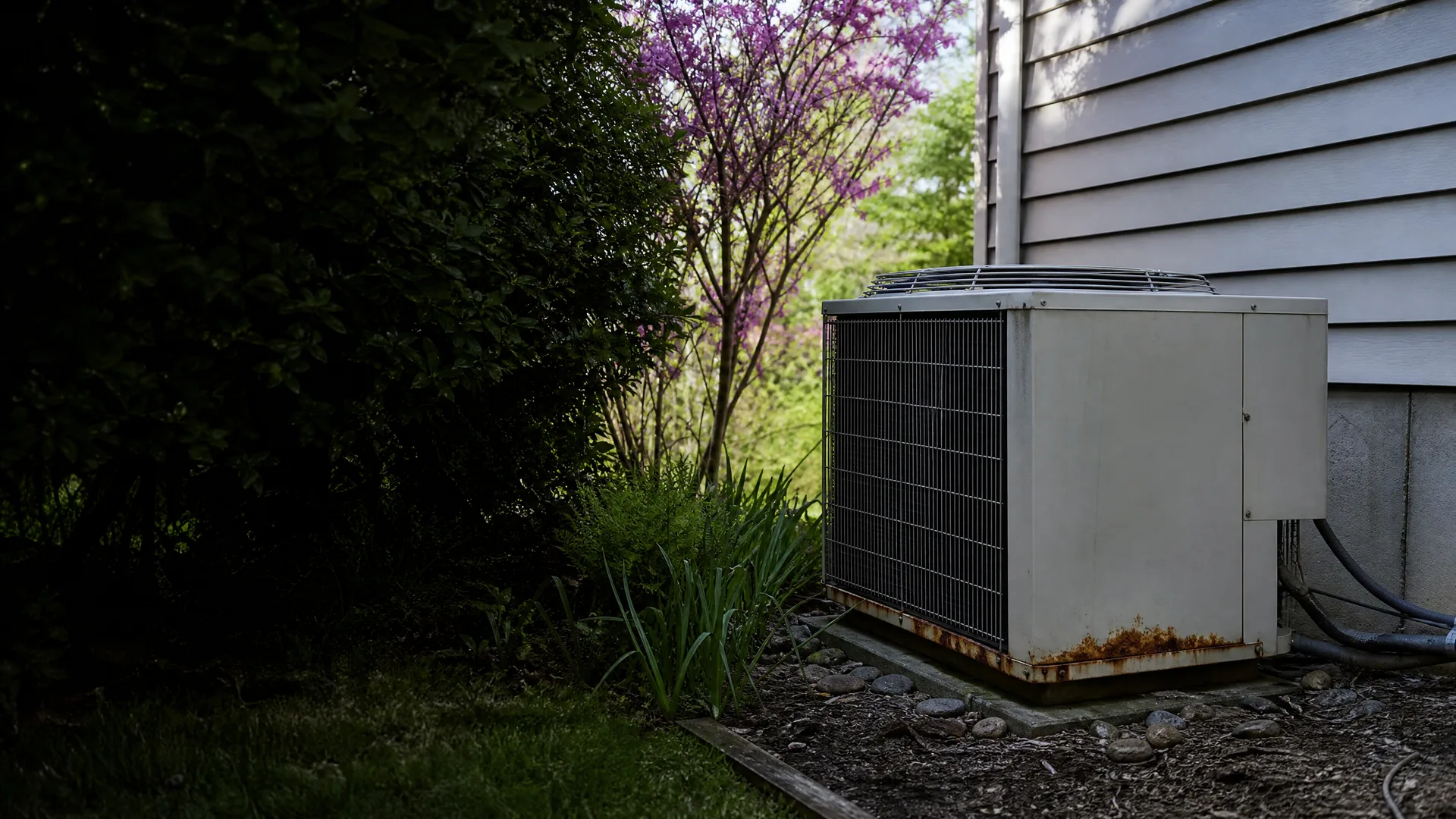
You're out in the side yard in April, checking the flower bed along the fence, when you notice the outdoor unit for the first time in months. Rust has crept along the base of it, a line of orange under the panel seams. The grass around it is still flat and wet from winter. You crouch down and give the housing a tap, and a few flakes come off onto the ground. It ran all winter to heat the house and it's about to start again for the summer, and looking at that rust, you're not sure it's going to make it through both. You straighten up, brush your hands off, and head back inside to fill out the form instead of spending your afternoon calling around.
One form replaces the calls you'd make to find a heat pump pro.
You're not committing to anything by asking.
A summer dew point of 68°F is what makes Arkansas air feel heavy even before the heat sets in. Your heat pump has to pull that moisture out of the air as well as cool it, and that's harder work than just dropping the temperature. On a muggy stretch you'll notice the unit running longer, the house feeling clammy even when the thermostat reads right, and vents that feel less cold than they should. A system that's lost some capacity shows it first on days like these. Source: NOAA climate normals.
NASA POWER T2MDEW county cells weighted by homes

This is a unit doing its job. The grille is clear, the lines running into the wall are intact, and nothing around the pad shows wear. A heat pump in this shape keeps up on its own, with a repair here and there if something ordinary wears out.

A grille packed with dust and debris like this one makes the unit work harder to move air across the coil. Left alone, that strain adds up over years of muggy summers and electric winters, and it shows up first as higher bills, then as parts failing sooner than they should.


Right now the work of fixing this is on you. You're the one calling around for quotes, explaining the same problem to every contractor who picks up, and trying to judge who's actually qualified from a five-minute phone call. Meanwhile the unit outside keeps doing whatever it's doing, running too long or not keeping up, while you're still in the stage of figuring out who to even call. That search alone can eat an evening or two before you've gotten a single number back.
Once you send the form, the job of finding someone is off your plate. You're not sorting through contractors or waiting on callbacks that don't come. A licensed installer gets matched to your job, looks at what your old system was doing and what your house needs, and handles the new install, the sizing, and the hookup. You still have a job to plan around, but you're not doing the legwork of finding who does it. That part is done.
At 12.87 cents a kilowatt-hour, a heat pump that's lost efficiency costs you more every month it runs, not just more to fix. A new system sized right for your house earns that rate back instead of wasting it on a unit working harder than it should.
EIA-861 2025 statewide residential average

This is what a healthy outdoor unit looks like. The grille is clean, the pad is clear, and the lines into the wall are intact. A heat pump kept up this way handles the muggy stretch of summer and the coldest nights of winter without falling behind.

Years of grime build up on the grille and the top panel until airflow suffers. A unit in this shape has to work harder to move the same air, and that shows up as a warmer house in summer and higher bills before it shows up as a breakdown.

A heat pump under 10 years old with a normal problem is worth fixing. One past 10 to 15 years, running harder every summer to do the same job, is telling you something. The repair bill is a data point, not the whole decision. Weigh it against the age and what you've already paid to keep the unit going.
Once you know which way you're leaning, the next step is getting someone out to look at it and give you a straight answer. That usually means finding a few contractors, calling each one, describing the same symptoms over and over, then sitting with quotes that don't line up and trying to tell which one actually reflects your situation. Send this form instead and that part stops being yours to do.


Let someone else find the pro
