Tell us about the job
Takes about a minute. No obligation.
A heat pump in this house runs its heating cycle harder than its cooling cycle, and the compressor and reversing valve accumulate wear accordingly. Homes in Crittenden County, AR run heat about five months a year, from November through March. Cold outdoor air pushes a heat pump toward its capacity limits, which means a contractor diagnosing a fault here checks low-ambient performance and refrigerant charge before assuming the compressor itself has failed. A system that has been slightly undercharged or poorly matched to the load shows that strain first in the heating months, when the unit is working hardest to extract heat from cold air.
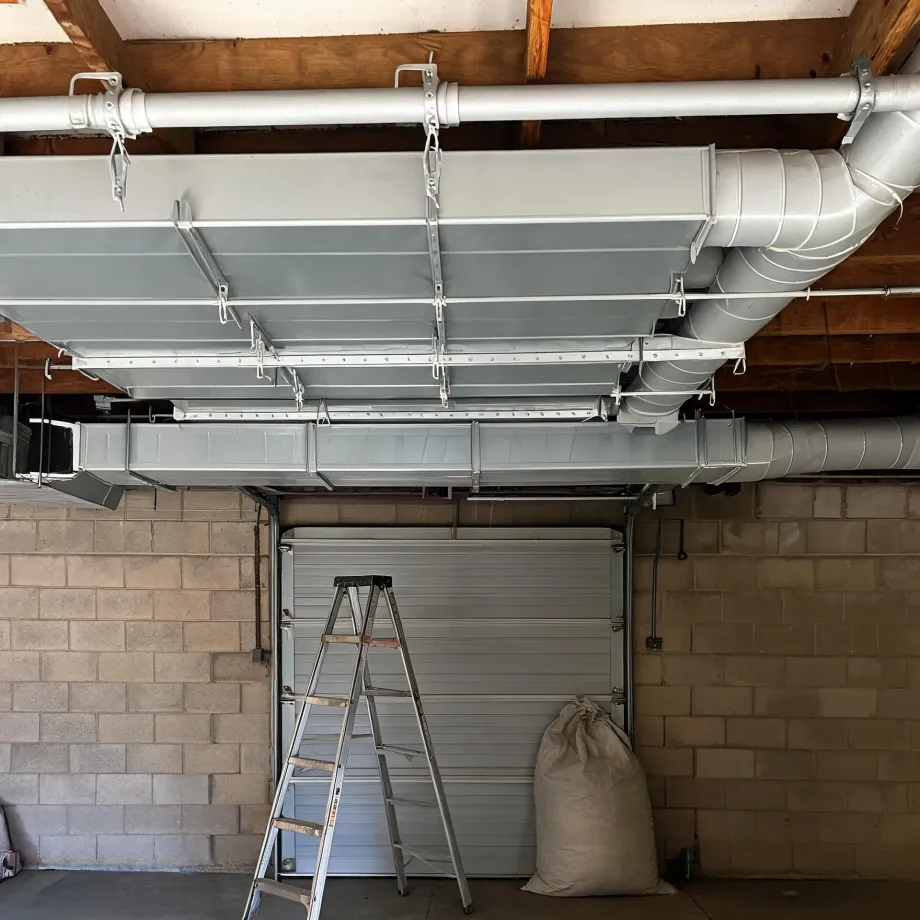
Ductwork routed through older walls and attics holds what it has been asked to move for a long time, and that accumulation shows up once a contractor opens a system rather than before. Half the homes in Crittenden County, Arkansas were built in 1983 or earlier (2020-2024 ACS 5-year). A heat pump running in stock like that has usually worked through more than one refrigerant charge, more than one contactor replacement, and wiring that was joined and re-joined by whoever serviced it last. What a contractor finds at the electrical connections and inside the refrigerant circuit determines the scope, and neither of those is visible until the covers come off.
The Parts of a Heat Pump a Contractor Checks First
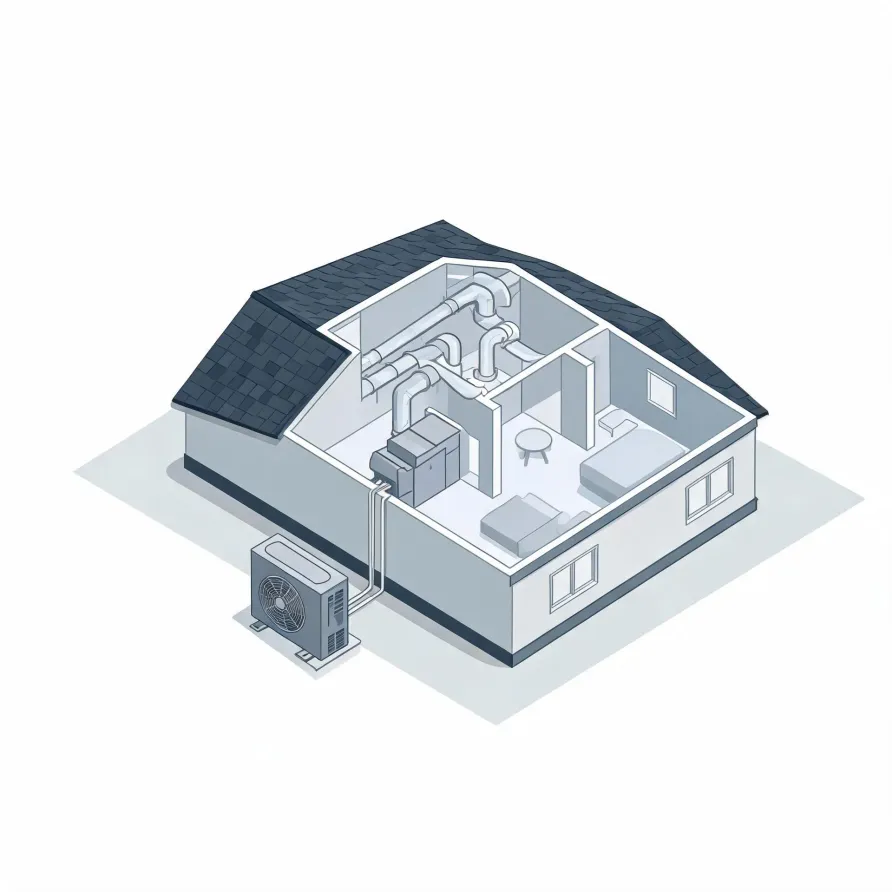
The outdoor unit sits beside the house and holds the compressor, which does the hardest work in the system. When a heat pump stops heating or cooling, the compressor and the refrigerant lines running to it are where a contractor looks first. A failed capacitor in that cabinet is another common starting point.
Inside the home, the air handler moves conditioned air through the house and contains the coil and the blower motor. The reversing valve, which switches the system between heating and cooling modes, sits in the outdoor unit and is a frequent target when the system runs but delivers the wrong temperature.
The drawing shows a typical heat pump layout, and a licensed contractor determines which components apply to your specific home and situation.
Find a contractor in Crittenden CountyCrittenden County, by the numbers
52 severe weather events were recorded in Crittenden County, Arkansas between 2015 and 2024.
NOAA National Centers for Environmental Information, Storm Events Database, bulk CSV export, events 2015-01-01 through 2024-12-31.Half the homes in Crittenden County, Arkansas were built in 1983 or earlier (2020-2024 ACS 5-year).
U.S. Census Bureau, 2020-2024 American Community Survey 5-Year EstimatesCrittenden County, Arkansas holds 21,388 housing units (2020-2024 ACS 5-year).
U.S. Census Bureau, 2020-2024 American Community Survey 5-Year EstimatesOwners occupy 57.4% of the occupied homes in Crittenden County, Arkansas (2020-2024 ACS 5-year).
U.S. Census Bureau, 2020-2024 American Community Survey 5-Year EstimatesCodes & Standards Behind Heat Pump Repair in Crittenden County, Arkansas2 sourced rules & standards
Licensing and Legal Requirements in Crittenden County, Arkansas
An Arkansas HVACR licence is good across the state: no city or county may require its own licence to do HVACR work, though local permits and inspections still apply.
Arkansas requires an HVACR licence or registration: it is unlawful to do HVACR work without the appropriate one unless the chapter exempts you.
Severe Weather Events in Crittenden County
Weather puts heat pumps to work, and the harder the swings, the more stress the equipment absorbs over time. How often conditions turn severe in this area shapes what local repair needs look like and what a contractor here will run into.
52 severe weather events, 2015–2024. Source: NOAA National Centers for Environmental Information, Storm Events Database.