Tell us about the job
Takes about a minute. No obligation.
A contractor diagnosing a heat pump in Lafayette County starts with the components that carry the heating load: the reversing valve, the compressor, and the defrost controls. Homes in Lafayette County, AR run heat about five months a year, from November through March. Across those months, the compressor cycles repeatedly in low outdoor temperatures, where a heat pump works hardest and where refrigerant pressure swings stress the valve most. A unit that was undersized or has a slow refrigerant leak shows those faults plainly by late winter. The reversing valve is often the first thing a contractor pulls readings on, because it fails in ways that mimic compressor problems and costs far less to replace.
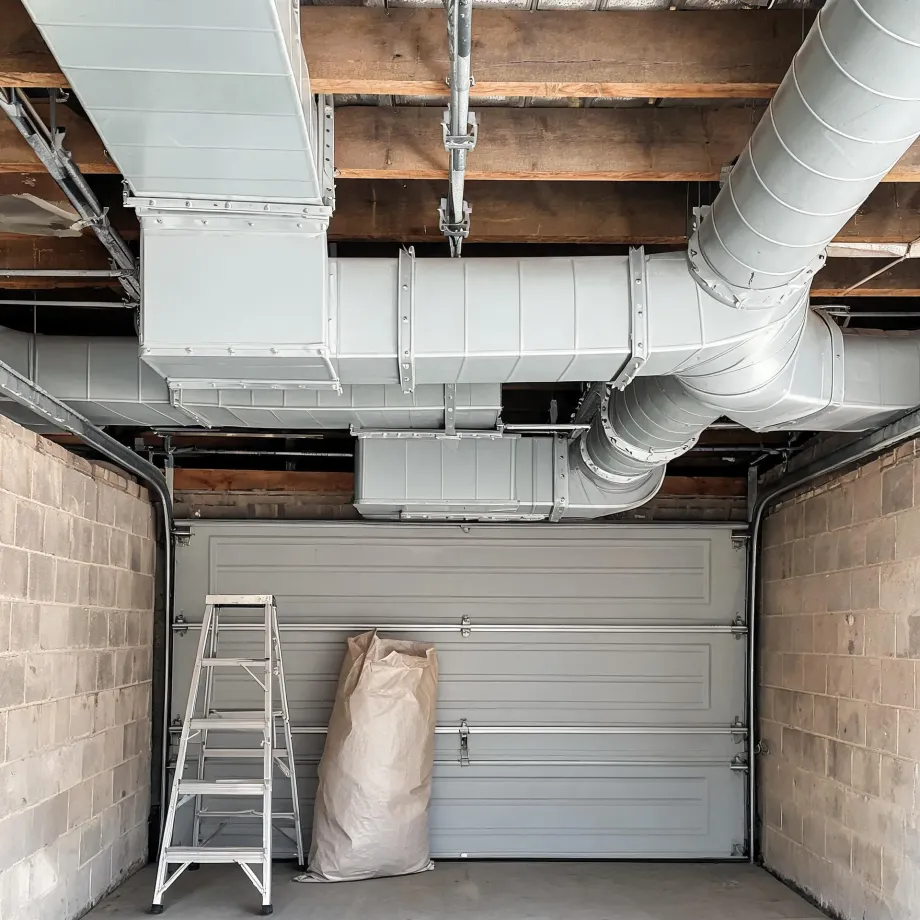
Ductwork laid out for one generation of equipment and then pressed into service for another carries its history inside it, and a heat pump repair in Lafayette County runs into that history the moment a contractor pulls a panel or checks a return. Half the homes in Lafayette County, Arkansas were built in 1978 or earlier (2020-2024 ACS 5-year). That age of construction means the heat pump running in a given house was almost certainly installed into infrastructure built around something else entirely, and the adaptation work done at that point shaped how the system has run ever since. When a repair goes deeper than a capacitor or a contactor, what the contractor finds in the duct connections and at the air handler tells them more about the repair scope than the fault code did.
The Parts of a Heat Pump a Contractor Checks First
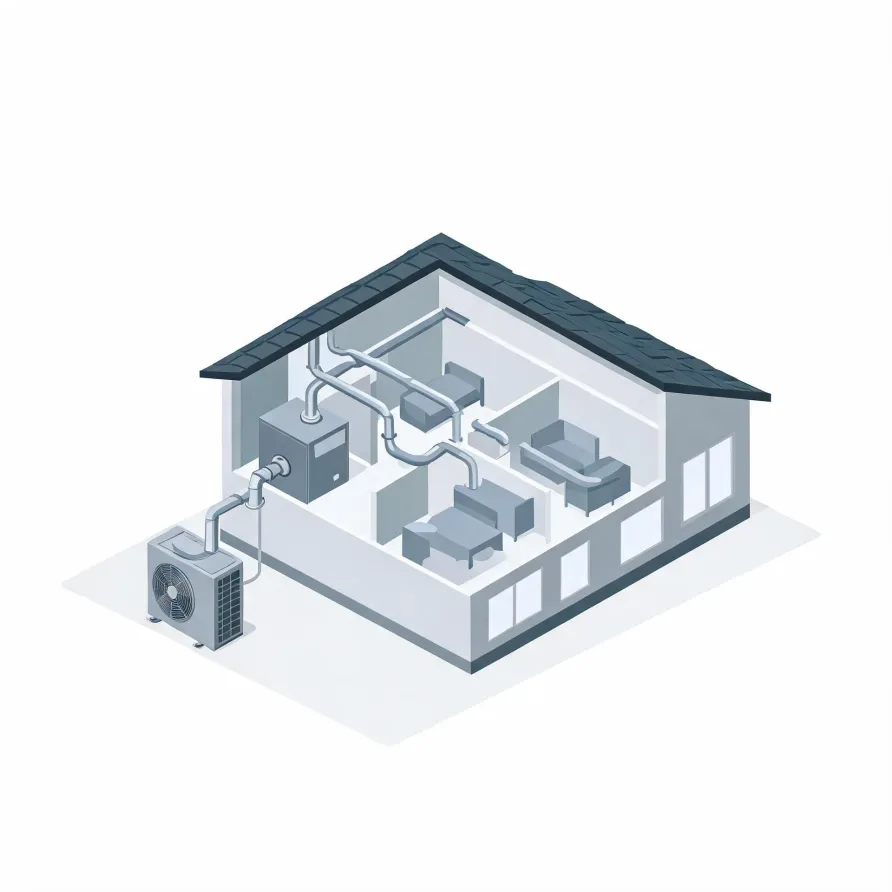
The outdoor unit sits on a pad beside the house and holds the compressor and one set of coils. The compressor is where most repair calls start. When it labors, runs short cycles, or stops altogether, the outdoor unit is the first place a contractor opens up.
Inside the house, the air handler pushes conditioned air through the home and contains a second coil, a blower motor, and the reversing valve that tells the system which direction to move heat. The refrigerant lines running between the two units and the expansion valve that regulates flow are also points a contractor traces when the system is underperforming.
The drawing shows a general layout of these components, and a licensed contractor determines what applies to your specific system and house.
Find a contractor in Lafayette CountyLafayette County by the numbers
76 severe weather events were recorded in Lafayette County, Arkansas between 2015 and 2024.
NOAA National Centers for Environmental Information, Storm Events Database, bulk CSV export, events 2015-01-01 through 2024-12-31.Half the homes in Lafayette County, Arkansas were built in 1978 or earlier (2020-2024 ACS 5-year).
U.S. Census Bureau, 2020-2024 American Community Survey 5-Year EstimatesLafayette County, Arkansas holds 3,940 housing units (2020-2024 ACS 5-year).
U.S. Census Bureau, 2020-2024 American Community Survey 5-Year EstimatesOwners occupy 79.3% of the occupied homes in Lafayette County, Arkansas (2020-2024 ACS 5-year).
U.S. Census Bureau, 2020-2024 American Community Survey 5-Year EstimatesCodes & Standards Covering Heat Pump Repair in Lafayette County, Arkansas2 sourced rules and standards
Licensing and Legal Requirements in Lafayette County, Arkansas
An Arkansas HVACR licence is good across the state: no city or county may require its own licence to do HVACR work, though local permits and inspections still apply.
Arkansas requires an HVACR licence or registration: it is unlawful to do HVACR work without the appropriate one unless the chapter exempts you.
Severe Weather Events in Lafayette County
Outdoor conditions put direct stress on heat pump components, and the local weather record shapes how hard those components work over time. Repair needs in Lafayette County follow from what the climate actually does here, which is why a contractor serving this area tracks it.
76 severe weather events, 2015–2024. Source: NOAA National Centers for Environmental Information, Storm Events Database.