Tell us about the job
Takes about a minute. No obligation.
On a heat pump, the heating side is the hard half: capacity drops as outdoor temperatures fall, and the compressor works longer cycles to hold a setpoint. Homes in Clay County, AR run heat about seven months a year, from October through April. That sustained demand accumulates on the compressor, the reversing valve, and the defrost controls, and a contractor diagnosing a repair here looks at those components first. A system that was undersized at install shows the strain sooner, because the heating months leave little slack.
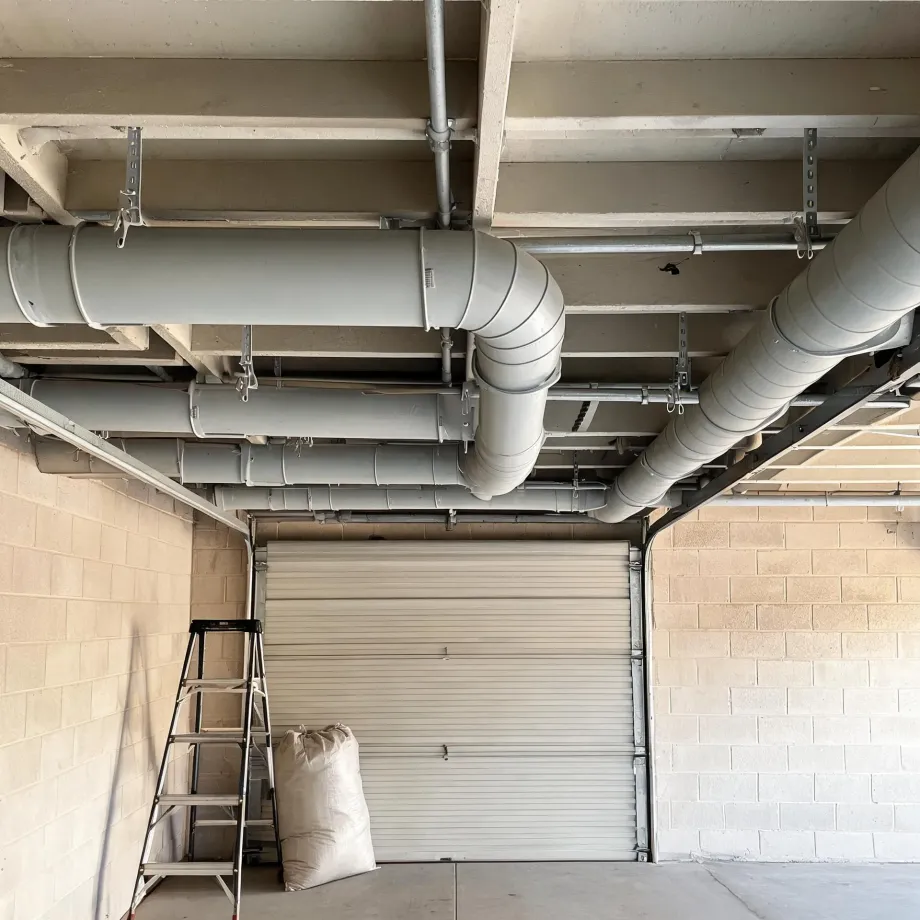
Ductwork in a house old enough to have started its life without a heat pump was put in for something different, and it shows. Half the homes in Clay County, Arkansas were built in 1973 or earlier (2020-2024 ACS 5-year). A contractor pulling a heat pump apart in this county finds that the repair question and the duct question are hard to separate: a system laboring against leaky, undersized runs reads on the equipment as a compressor or refrigerant problem until the rest of the system is checked. The parts a unit of this vintage takes may still be available, but ordering them before the ductwork is assessed can mean the same component fails again.
The Parts of a Heat Pump a Contractor Checks First
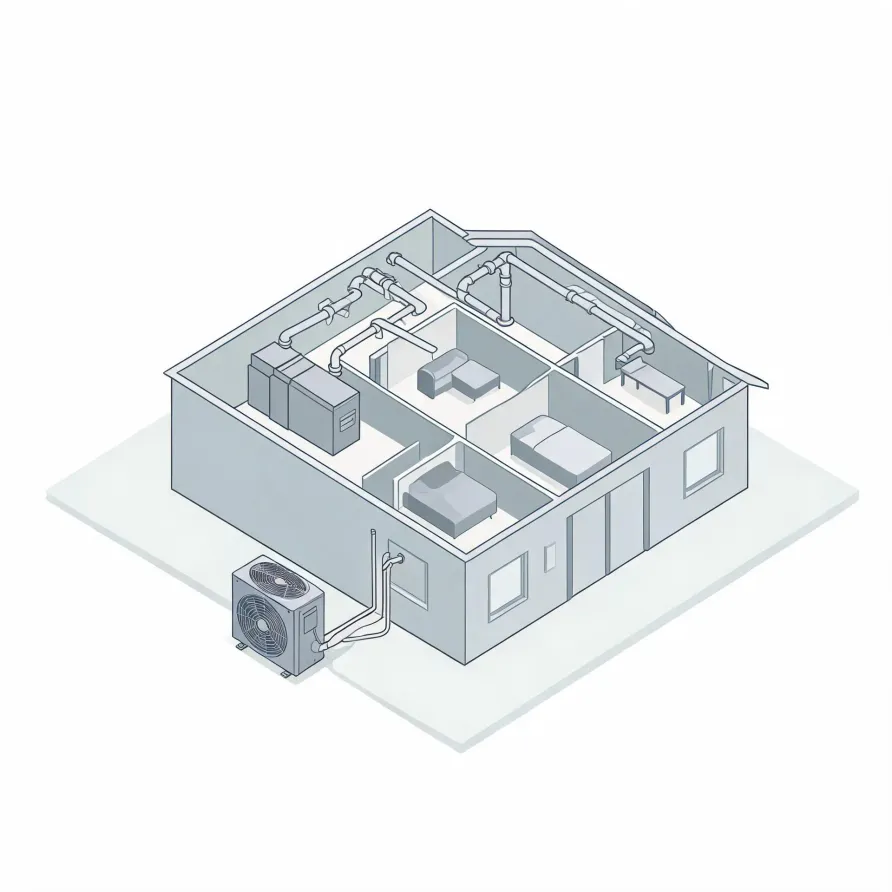
The outdoor unit sits on a pad beside the house and holds the compressor and the outdoor coil. The compressor is what most contractors reach first when a heat pump stops doing its job, because it drives the whole cycle. The outdoor coil works alongside it, and a bent fin or a refrigerant leak there shows up fast in the system's behavior.
Inside, the air handler hangs in a closet, attic, or utility room and pushes conditioned air through the house. The indoor coil sits inside it, and the expansion valve sits nearby, controlling refrigerant flow between the two units. A copper refrigerant line runs between the outdoor unit and the air handler, and a fault anywhere along it affects both ends.
The drawing shows the general layout of a heat pump system, and a licensed contractor determines what applies to your specific house.
Find a contractor in Clay CountyClay County, Arkansas, by the numbers
83 severe weather events were recorded in Clay County, Arkansas between 2015 and 2024.
NOAA National Centers for Environmental Information, Storm Events Database, bulk CSV export, events 2015-01-01 through 2024-12-31.Half the homes in Clay County, Arkansas were built in 1973 or earlier (2020-2024 ACS 5-year).
U.S. Census Bureau, 2020-2024 American Community Survey 5-Year EstimatesClay County, Arkansas holds 7,492 housing units (2020-2024 ACS 5-year).
U.S. Census Bureau, 2020-2024 American Community Survey 5-Year EstimatesOwners occupy 74.7% of the occupied homes in Clay County, Arkansas (2020-2024 ACS 5-year).
U.S. Census Bureau, 2020-2024 American Community Survey 5-Year EstimatesCodes & Standards Governing Heat Pump Repair in Clay County, Arkansas2 sourced rules & standards
Licensing and Legal Requirements in Clay County, Arkansas
An Arkansas HVACR licence is good across the state: no city or county may require its own licence to do HVACR work, though local permits and inspections still apply.
Arkansas requires an HVACR licence or registration: it is unlawful to do HVACR work without the appropriate one unless the chapter exempts you.
Severe Weather Events in Clay County
Extreme weather puts real stress on heat pump systems, which have to work harder and recover faster after every major event. Repair demand in Clay County follows the weather, which is why local history matters here.
83 severe weather events, 2015–2024. Source: NOAA National Centers for Environmental Information, Storm Events Database.