Tell us about the job
Takes about a minute. No obligation.
A contractor called out to repair a heat pump in Drew County looks first at the components that carry the heating load: the reversing valve, the defrost board, and the low-ambient controls. Homes in Drew County, AR run heat about five months a year, from November through March. Cold weather pushes a heat pump harder than a furnace because capacity drops as outdoor temperatures fall, so the refrigerant circuit and the defrost cycle work in tandem every cold morning. When defrost controls fail, the outdoor coil ices over and the compressor runs against that restriction. That pattern of wear shows up on the defrost board and the reversing valve solenoid before it shows up anywhere else, and a contractor who skips those components and prices a compressor first is quoting the wrong repair.
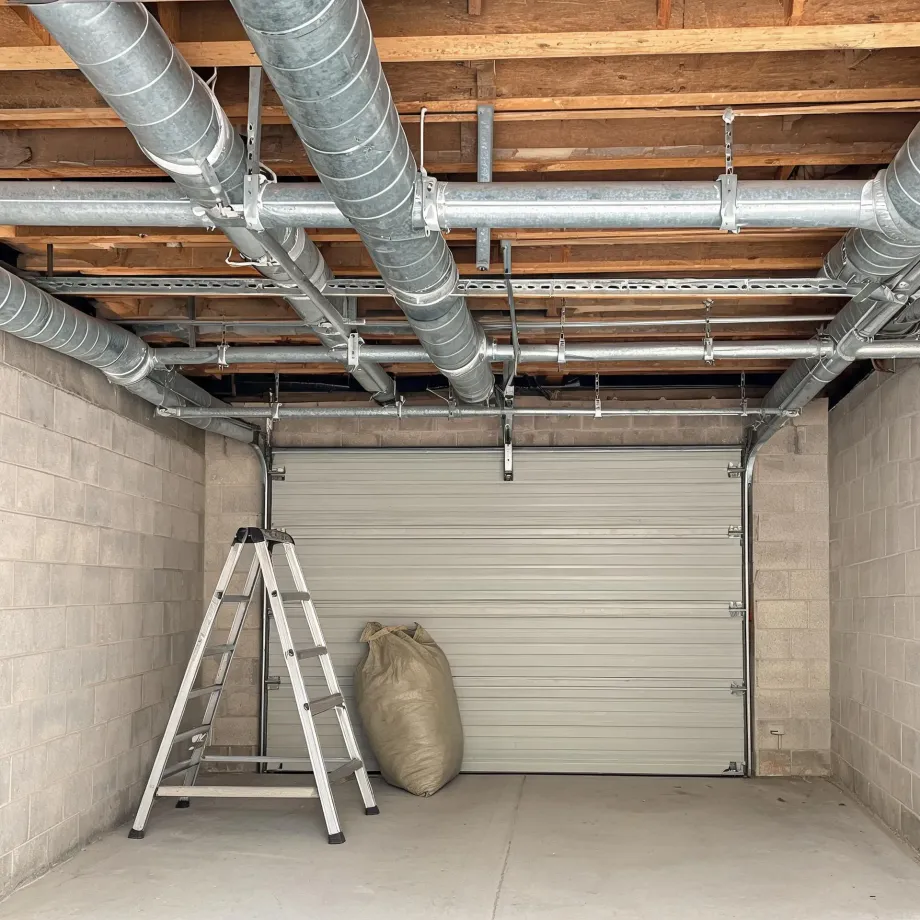
Ductwork that has outlasted several rounds of equipment replacement is what shapes the scope of a heat pump repair call in Drew County. Half the homes in Drew County, Arkansas were built in 1985 or earlier (2020-2024 ACS 5-year). A contractor who opens the unit and finds a failed capacitor or a refrigerant leak has a short list of parts to source. What takes longer to sort out is whether the duct runs feeding that unit are still sealed well enough to let a repaired system perform, or whether degraded connections are being charged to the equipment as its fault. Those two findings produce different repair scopes and different bills.
The Parts of a Heat Pump a Contractor Checks First
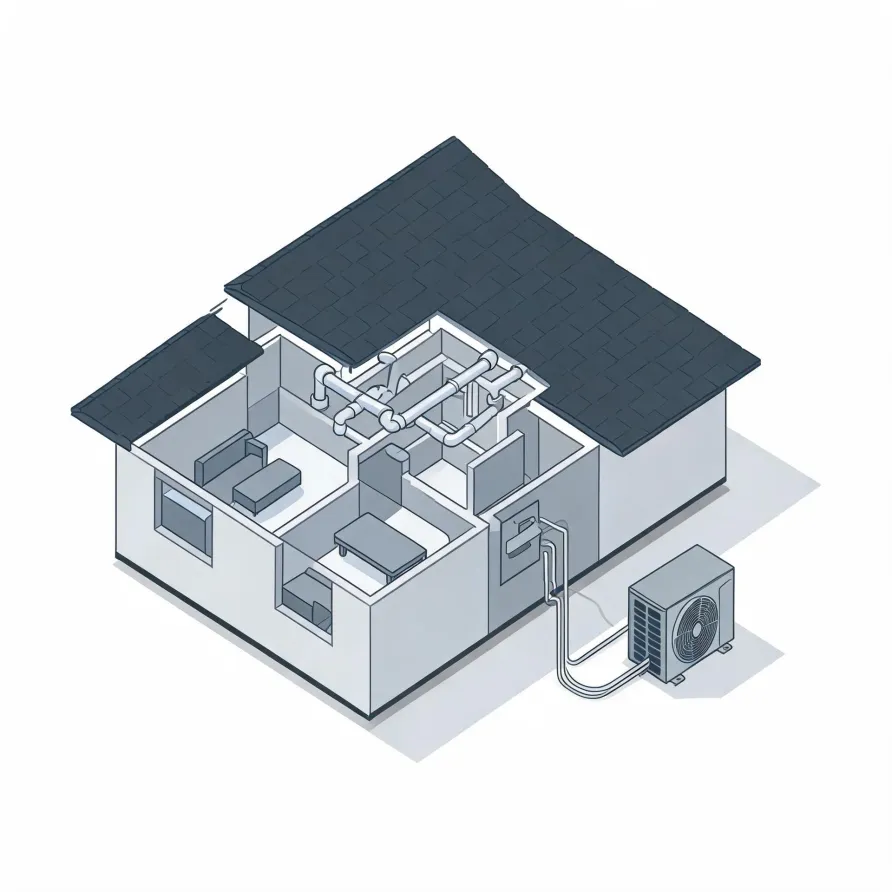
The outdoor unit holds the compressor and the condenser coil, and it sits on a pad outside the house. The compressor is where most repair calls begin. When it labors or fails, the whole system stops moving heat. The condenser coil wraps around it, and a bent or fouled coil will show up in how the unit runs.
Inside the house, the air handler contains the evaporator coil and the blower that pushes conditioned air through the home. The reversing valve, which sits in the refrigerant line between the two units, is what lets a heat pump both heat and cool. A contractor will check the expansion valve and the refrigerant lines as well, since a slow leak or a blocked valve can mimic the symptoms of a failed compressor.
The drawing shows the general layout of a heat pump system, and a licensed contractor determines what applies to your specific house.
Find a contractor in Drew CountyDrew County, Arkansas, by the numbers
75 severe weather events were recorded in Drew County, Arkansas between 2015 and 2024.
NOAA National Centers for Environmental Information, Storm Events Database, bulk CSV export, events 2015-01-01 through 2024-12-31.Half the homes in Drew County, Arkansas were built in 1985 or earlier (2020-2024 ACS 5-year).
U.S. Census Bureau, 2020-2024 American Community Survey 5-Year EstimatesDrew County, Arkansas holds 8,289 housing units (2020-2024 ACS 5-year).
U.S. Census Bureau, 2020-2024 American Community Survey 5-Year EstimatesOwners occupy 63.7% of the occupied homes in Drew County, Arkansas (2020-2024 ACS 5-year).
U.S. Census Bureau, 2020-2024 American Community Survey 5-Year EstimatesRules & Standards Governing Heat Pump Repair in Drew County, Arkansas2 sourced rules and standards
Licensing Rules for HVAC Repair in Drew County, Arkansas
An Arkansas HVACR licence is good across the state: no city or county may require its own licence to do HVACR work, though local permits and inspections still apply.
Arkansas requires an HVACR licence or registration: it is unlawful to do HVACR work without the appropriate one unless the chapter exempts you.
Severe Weather Events in Drew County
Weather puts heat pump systems under real mechanical stress, and how hard equipment has to work over time shapes what kind of repair it eventually needs. Knowing what the climate in this area has demanded of heating and cooling systems helps a local contractor diagnose problems and plan the right fix.
75 severe weather events, 2015–2024. Source: NOAA National Centers for Environmental Information, Storm Events Database.