Tell us about the job
Takes about a minute. No obligation.
Sizing a heat pump for Grant County means working out what the unit has to deliver on the coldest nights, not just what it can handle on an average day. Homes in Grant County, AR run heat about five months a year, from November through March. A heat pump loses capacity as outdoor temperatures drop, so the gap between what the unit puts out and what the house needs widens exactly when the demand peaks. A contractor who skips a proper load calculation leaves that gap to be covered by the backup heat strip, which then carries a sustained load it was designed to handle only occasionally. That changes the component wear picture for the whole system.
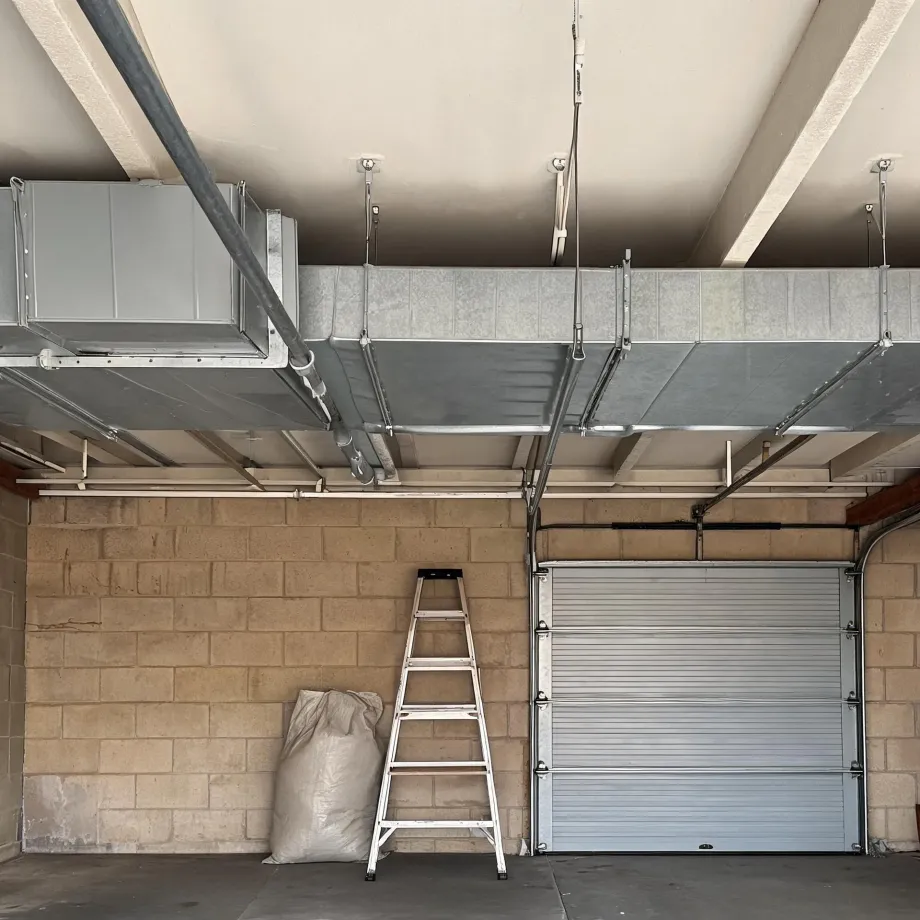
Ductwork laid in during an earlier generation of home construction was sized for the systems of that era, and a heat pump draws air in a pattern those runs were not designed around. Half the homes in Grant County, Arkansas were built in 1991 or earlier (2020-2024 ACS 5-year). That spread across the county's housing stock means a contractor assessing a heat pump installation has to open and measure what is already in the walls before the job takes any fixed shape. A duct system that works adequately with what is running now can still restrict airflow enough to undercut a new unit's rated output, and that is what gets resolved during site assessment, not after the equipment arrives.
What a Heat Pump Installation Puts in Your Home
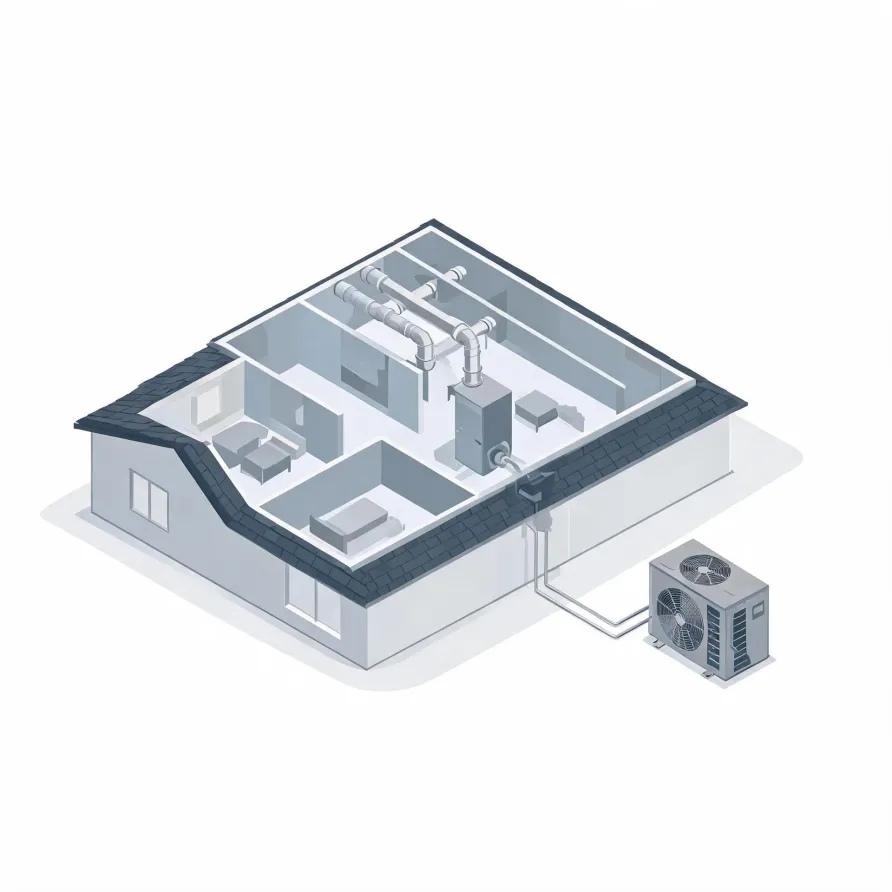
The outdoor unit sits on a pad beside the house and holds the compressor and the refrigerant coil that do the core work of moving heat. Inside, an air handler mounts in a utility space, closet, or attic and pushes conditioned air through the home. Together these two units are what a new heat pump installation adds to the structure.
A refrigerant line set runs between the outdoor unit and the air handler, connecting the two along an exterior wall. A thermostat goes on an interior wall where it reads the home's temperature and tells the system when to run. Some installations also include a condensate drain line routed away from the air handler to carry off moisture.
The drawing shows a typical layout, and a licensed contractor determines exactly what applies to your home and its existing setup.
Find a contractor in Grant CountyGrant County, Arkansas, by the numbers
67 severe weather events were recorded in Grant County, Arkansas between 2015 and 2024.
NOAA National Centers for Environmental Information, Storm Events Database, bulk CSV export, events 2015-01-01 through 2024-12-31.Half the homes in Grant County, Arkansas were built in 1991 or earlier (2020-2024 ACS 5-year).
U.S. Census Bureau, 2020-2024 American Community Survey 5-Year EstimatesGrant County, Arkansas holds 7,957 housing units (2020-2024 ACS 5-year).
U.S. Census Bureau, 2020-2024 American Community Survey 5-Year EstimatesOwners occupy 80.7% of the occupied homes in Grant County, Arkansas (2020-2024 ACS 5-year).
U.S. Census Bureau, 2020-2024 American Community Survey 5-Year EstimatesRules and Standards Behind Heat Pump Installation in Grant County, Arkansas2 sourced rules and standards
Licensing and Legal Requirements in Grant County, Arkansas
An Arkansas HVACR licence is good across the state: no city or county may require its own licence to do HVACR work, though local permits and inspections still apply.
Arkansas requires an HVACR licence or registration: it is unlawful to do HVACR work without the appropriate one unless the chapter exempts you.
Severe Weather Events in Grant County
Extreme weather puts real strain on heating and cooling equipment, shortening service life and raising the odds of a failure at the worst moment. How hard a heat pump has to work depends on what the climate actually does here, which is why local weather history belongs in any honest conversation about installation.
67 severe weather events, 2015–2024. Source: NOAA National Centers for Environmental Information, Storm Events Database.