Tell us about the job
Takes about a minute. No obligation.
Sizing a heat pump for this county means working out what the unit can actually deliver on the coldest nights, not just what its nameplate says. Homes in Nevada County, AR run heat about five months a year, from November through March. As outdoor temperatures fall, a heat pump's heating capacity drops with them, so a unit that covers the house on a mild December day may fall short by February. A contractor doing a load calculation here has to establish where that gap opens and whether a back-up heat source closes it, before committing to equipment. Get the sizing wrong and the system runs hard, cycles constantly, and hands the shortfall to an electric strip heater that was never meant to carry the whole load.
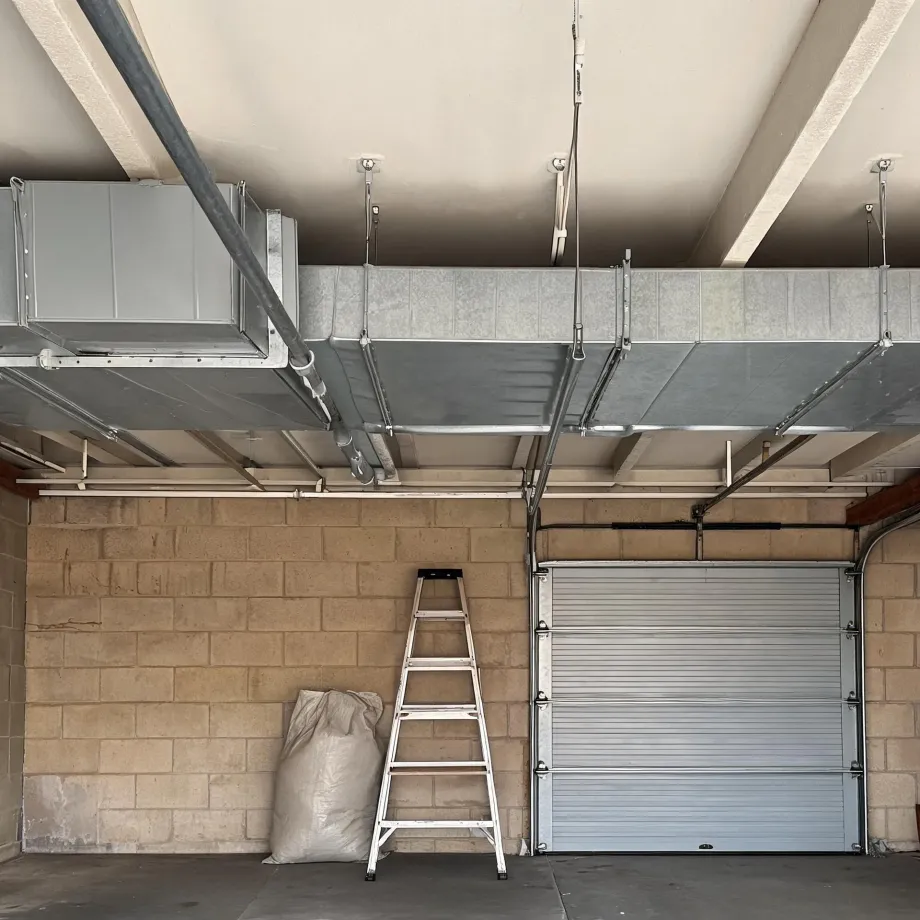
Ductwork that was sized and routed for a different generation of equipment does not automatically carry a heat pump's airflow requirements, and that gap is where installation jobs in Nevada County get decided. Half the homes in Nevada County, Arkansas were built in 1983 or earlier (2020-2024 ACS 5-year). What a contractor opens up in a typical house here is duct runs built around whatever was standard at the time, with sealing, sizing, and return placement that may need to change before a new system performs as rated. The electrical service gets the same check: a heat pump draws differently than what the house was originally wired to support, and whether the panel can take that load without an upgrade is a question the contractor answers before the new unit is quoted.
What a Heat Pump Installation Puts in Your Home
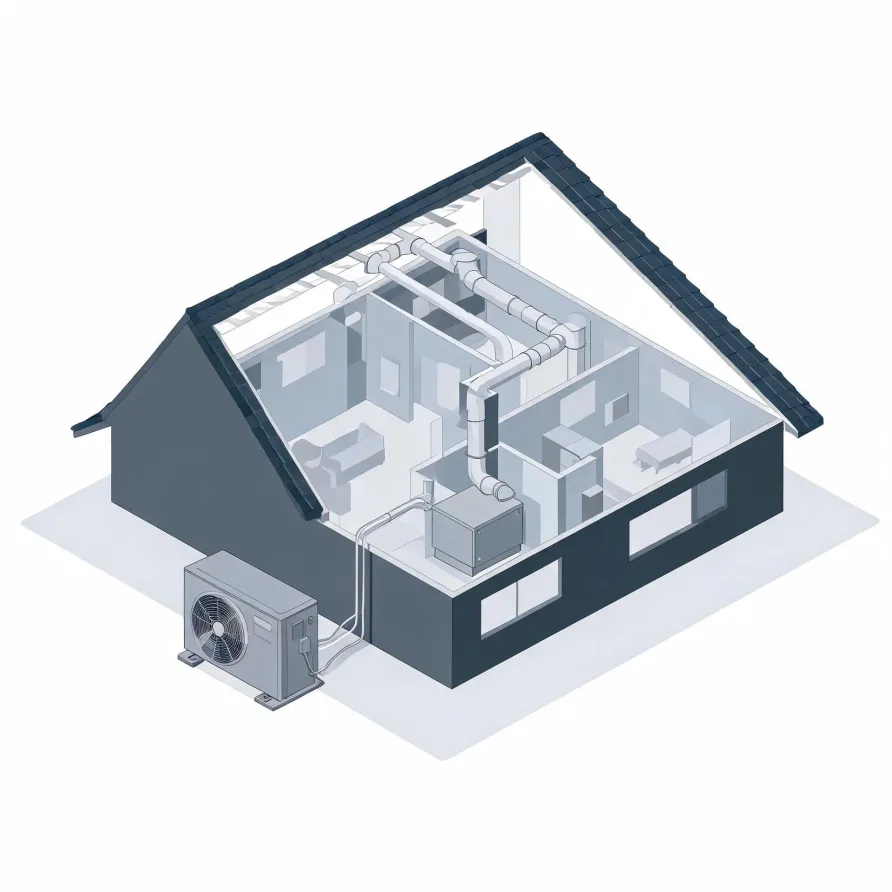
The outdoor unit sits on a pad beside the house and holds the compressor and the condenser coil, which are the core of the system. Inside, the air handler mounts in a utility space, closet, or attic and moves conditioned air through the home. Both units arrive as separate pieces and get set in place during the same job.
A refrigerant line set runs between the two units, connecting the outdoor pad to wherever the air handler sits. A thermostat mounts on an interior wall and gives the homeowner control over the whole system. A condensate drain line runs from the air handler to a nearby drain to carry off moisture the coil pulls from the air.
The drawing shows a typical layout, and a licensed contractor determines exactly how each piece fits the specifics of your house.
Find a contractor in Nevada CountyNevada County, Arkansas, by the numbers
60 severe weather events were recorded in Nevada County, Arkansas between 2015 and 2024.
NOAA National Centers for Environmental Information, Storm Events Database, bulk CSV export, events 2015-01-01 through 2024-12-31.Half the homes in Nevada County, Arkansas were built in 1983 or earlier (2020-2024 ACS 5-year).
U.S. Census Bureau, 2020-2024 American Community Survey 5-Year EstimatesNevada County, Arkansas holds 4,308 housing units (2020-2024 ACS 5-year).
U.S. Census Bureau, 2020-2024 American Community Survey 5-Year EstimatesOwners occupy 76.0% of the occupied homes in Nevada County, Arkansas (2020-2024 ACS 5-year).
U.S. Census Bureau, 2020-2024 American Community Survey 5-Year EstimatesHeat Pump Installation Rules and Codes for Nevada County, Arkansas2 sourced rules and standards
Contractor Rules in Nevada County, Arkansas
An Arkansas HVACR licence is good across the state: no city or county may require its own licence to do HVACR work, though local permits and inspections still apply.
Arkansas requires an HVACR licence or registration: it is unlawful to do HVACR work without the appropriate one unless the chapter exempts you.
Severe Weather Events in Nevada County
Storms, heat, and hard freezes put real hours on heating and cooling equipment, and those hours add up differently depending on where you live. Heat pump sizing and installation in Nevada County is shaped by what the local climate actually demands.
60 severe weather events, 2015–2024. Source: NOAA National Centers for Environmental Information, Storm Events Database.