Tell us about the job
Takes about a minute. No obligation.
Sizing a heat pump in Madison County starts with the heating side, not the cooling side. Homes in Madison County, AR run heat about seven months a year, from October through April. A heat pump loses capacity as outdoor temperatures fall, which means the coldest weeks of that stretch are exactly when the equipment is working hardest and delivering least. A contractor who runs the load calculation without accounting for that gap will specify a system that leans on backup heat far more than it should, driving up operating costs and putting strain on components that were never meant to carry the base load.
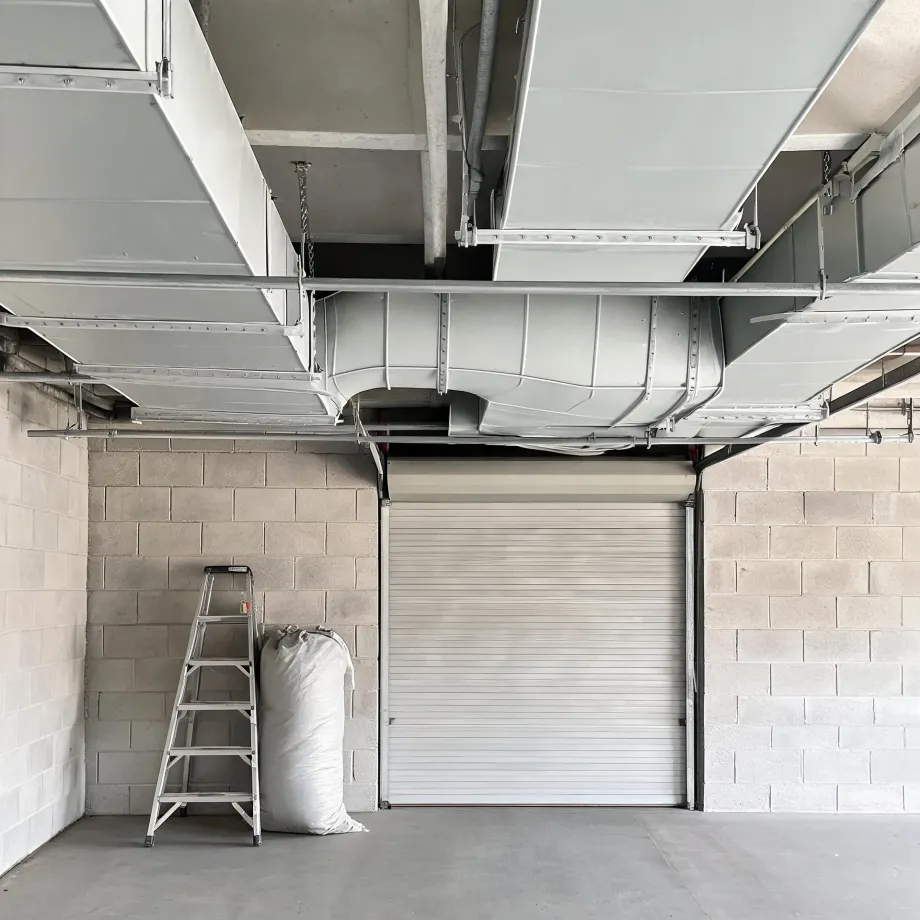
Ductwork and electrical panels were built for different equipment than what homeowners are putting in now. Half the homes in Madison County, Arkansas were built in 1990 or earlier (2020-2024 ACS 5-year). A house ducted for a gas furnace or sized for window units carries a service panel that a heat pump compressor will push past its comfortable limit, and a contractor quoting a heat pump installation has to open the electrical box before the equipment conversation goes any further. The ductwork gets the same look: older flex runs and undersized returns that moved air for one system do not always move it well for another.
What a Heat Pump Installation Covers
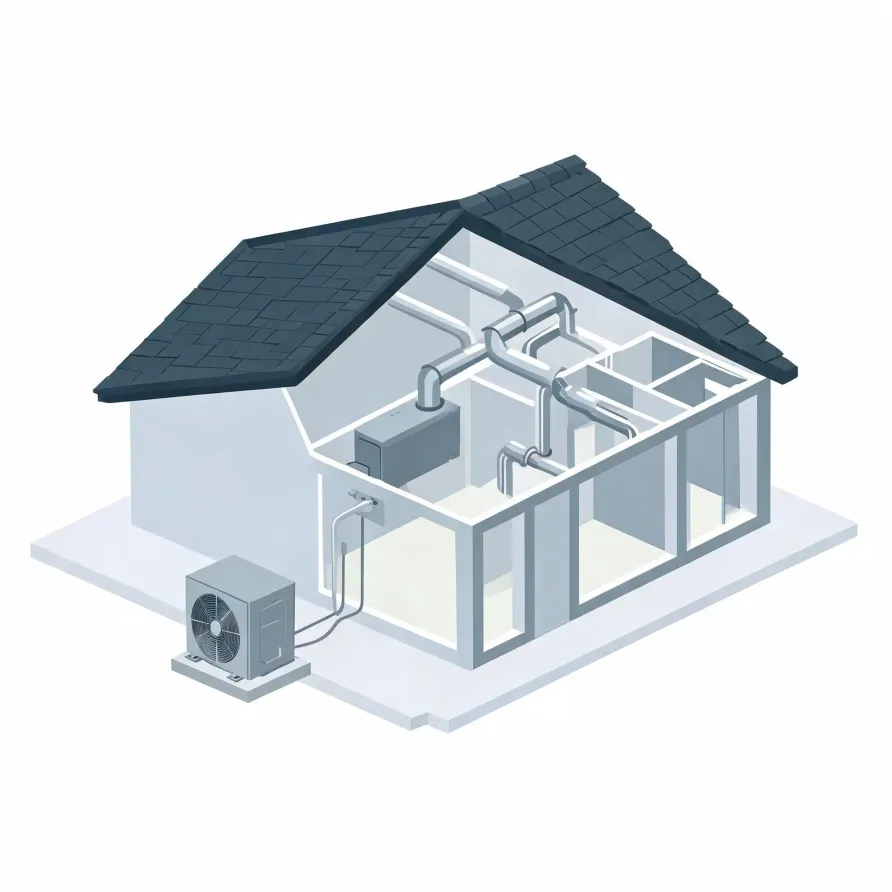
The outdoor unit is the piece a homeowner sees first, sitting on a pad or brackets outside the house, and it holds the compressor and coil that do the core work of the system. Inside, the air handler mounts in a utility space, attic, or closet and moves conditioned air through the home. Together, these two units are what a new installation places.
A refrigerant line set runs between the outdoor unit and the air handler, carrying the working fluid that connects the two sides of the system. A thermostat mounts on an interior wall and gives the homeowner control over the whole system. The condensate drain line runs from the air handler to a suitable drain point, removing moisture pulled from the indoor air.
The drawing shows a representative layout, and a licensed contractor determines what the installation requires for this specific house.
Find a contractor in Madison CountyMadison County, Arkansas, by the numbers
50 severe weather events were recorded in Madison County, Arkansas between 2015 and 2024.
NOAA National Centers for Environmental Information, Storm Events Database, bulk CSV export, events 2015-01-01 through 2024-12-31.Half the homes in Madison County, Arkansas were built in 1990 or earlier (2020-2024 ACS 5-year).
U.S. Census Bureau, 2020-2024 American Community Survey 5-Year EstimatesMadison County, Arkansas holds 7,744 housing units (2020-2024 ACS 5-year).
U.S. Census Bureau, 2020-2024 American Community Survey 5-Year EstimatesOwners occupy 79.5% of the occupied homes in Madison County, Arkansas (2020-2024 ACS 5-year).
U.S. Census Bureau, 2020-2024 American Community Survey 5-Year EstimatesRules and Standards Behind Heat Pump Installation in Madison County, Arkansas2 sourced rules and standards
Licensing and Legal Requirements in Madison County, Arkansas
An Arkansas HVACR licence is good across the state: no city or county may require its own licence to do HVACR work, though local permits and inspections still apply.
Arkansas requires an HVACR licence or registration: it is unlawful to do HVACR work without the appropriate one unless the chapter exempts you.
Severe Weather Events in Madison County
Weather places a real load on heating and cooling equipment, and that load varies by location. What the climate does in Madison County shapes how hard a heat pump has to work and how well it needs to be sized and installed.
50 severe weather events, 2015–2024. Source: NOAA National Centers for Environmental Information, Storm Events Database.