Tell us about the job
Takes about a minute. No obligation.
A heat pump's compressor carries the heating load until outdoor temperatures fall far enough that the unit's capacity drops below what the house needs, and at that point backup heat takes over. Homes in Boone County, AR run heat about seven months a year, from October through April. That span asks a contractor to do real sizing work before the install, because a unit matched to average conditions rather than the coldest days in that window will lean on resistance backup strips through the hard part of the season, running up electricity costs and signaling that the primary equipment was never sized to carry the job. The refrigerant circuit, the reversing valve, and the defrost controls all cycle through those months, and a poor install shows in those components first.
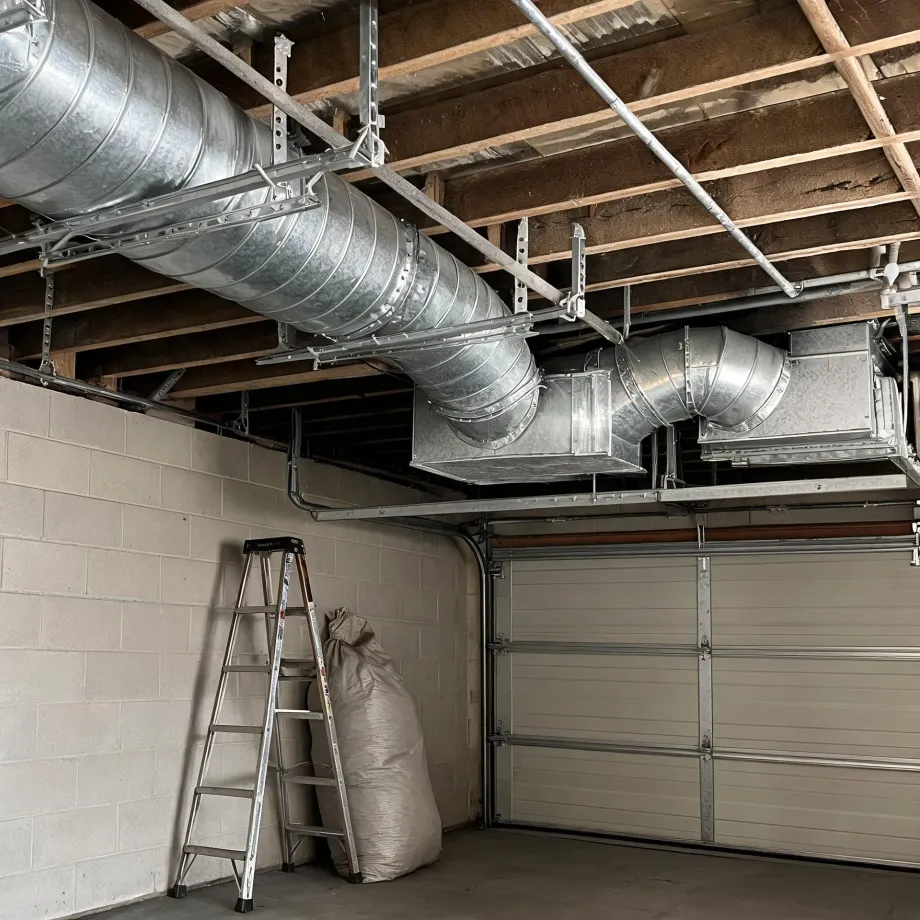
Ductwork sized for a furnace-dominant system does not move air the way a heat pump needs it to move. Half the homes in Boone County, Arkansas were built in 1985 or earlier (2020-2024 ACS 5-year). That age of construction means a contractor assessing a heat pump installation is looking hard at the existing duct layout and the electrical service, because both were designed around equipment that is no longer in the house. Where the ducts are undersized or the panel cannot carry the new load, those are the variables that shape the quote and the scope of the job.
What a Heat Pump Installation Covers
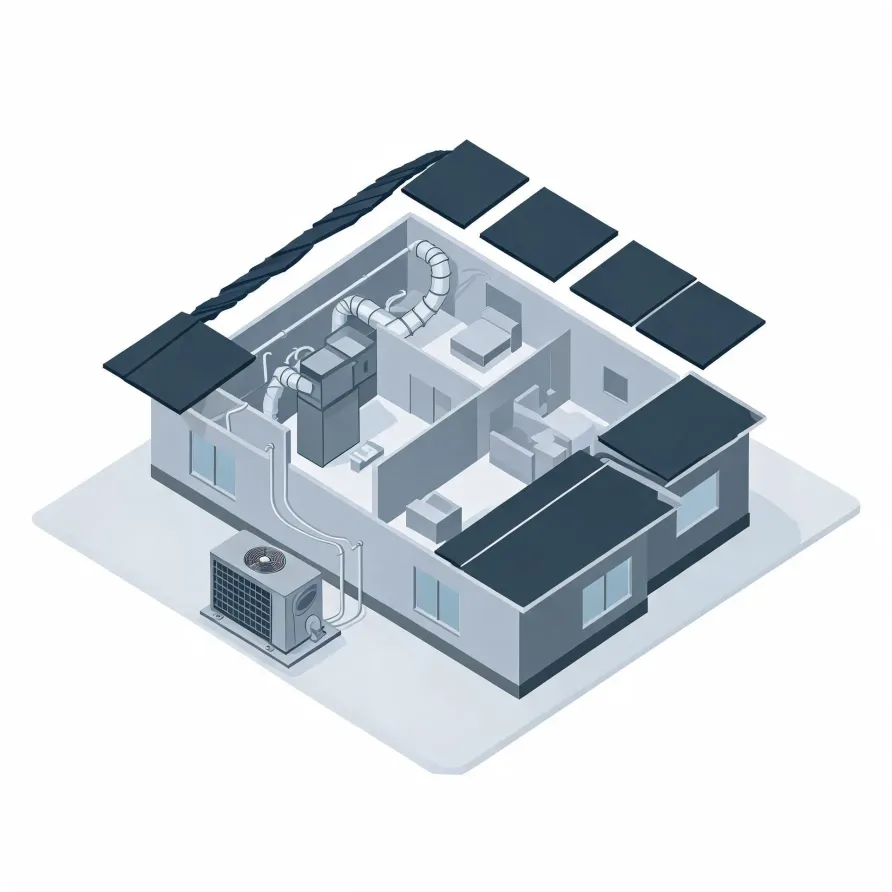
The outdoor unit sits on a pad beside the house and holds the compressor and the coil that exchanges heat with the outside air. Inside, an air handler mounts in a utility space, closet, or attic and moves conditioned air through the home. Together these two units do the system's main work.
A refrigerant line set runs between the outdoor unit and the air handler, connecting the two halves of the system. A thermostat mounts on an interior wall and tells the system when to run. A condensate drain line carries moisture away from the air handler to a floor drain or outside.
The drawing shows a typical layout, and a licensed contractor determines exactly what applies to your house.
Find a contractor in Boone CountyBoone County, Arkansas, by the numbers
90 severe weather events were recorded in Boone County, Arkansas between 2015 and 2024.
NOAA National Centers for Environmental Information, Storm Events Database, bulk CSV export, events 2015-01-01 through 2024-12-31.Half the homes in Boone County, Arkansas were built in 1985 or earlier (2020-2024 ACS 5-year).
U.S. Census Bureau, 2020-2024 American Community Survey 5-Year EstimatesBoone County, Arkansas holds 17,459 housing units (2020-2024 ACS 5-year).
U.S. Census Bureau, 2020-2024 American Community Survey 5-Year EstimatesOwners occupy 70.8% of the occupied homes in Boone County, Arkansas (2020-2024 ACS 5-year).
U.S. Census Bureau, 2020-2024 American Community Survey 5-Year EstimatesRules and Standards Governing Heat Pump Installation in Boone County, Arkansas2 sourced rules and standards
Licensing and Legal Requirements in Boone County, Arkansas
An Arkansas HVACR licence is good across the state: no city or county may require its own licence to do HVACR work, though local permits and inspections still apply.
Arkansas requires an HVACR licence or registration: it is unlawful to do HVACR work without the appropriate one unless the chapter exempts you.
Severe Weather Events in Boone County
Boone County weather puts real demands on heating and cooling equipment over its lifetime. How hard a heat pump works, and how long it holds up, is shaped by local conditions, which is why the weather record here belongs alongside any conversation about installation.
90 severe weather events, 2015–2024. Source: NOAA National Centers for Environmental Information, Storm Events Database.