Tell us about the job
Takes about a minute. No obligation.
Sizing a heat pump for Chicot County means working out what the unit has to do when outdoor temperatures drop hardest, because that is where capacity falls and backup heat starts carrying the load. Homes in Chicot County, AR run heat about five months a year, from November through March. A contractor quoting a new system here has to establish the heating demand first, then match a unit whose capacity at low ambient temperatures still covers the house, or specify the backup strip heat to fill the gap when it does not. An undersized installation costs more to run every cold month, and the resistance coil takes the wear the heat pump was supposed to absorb.
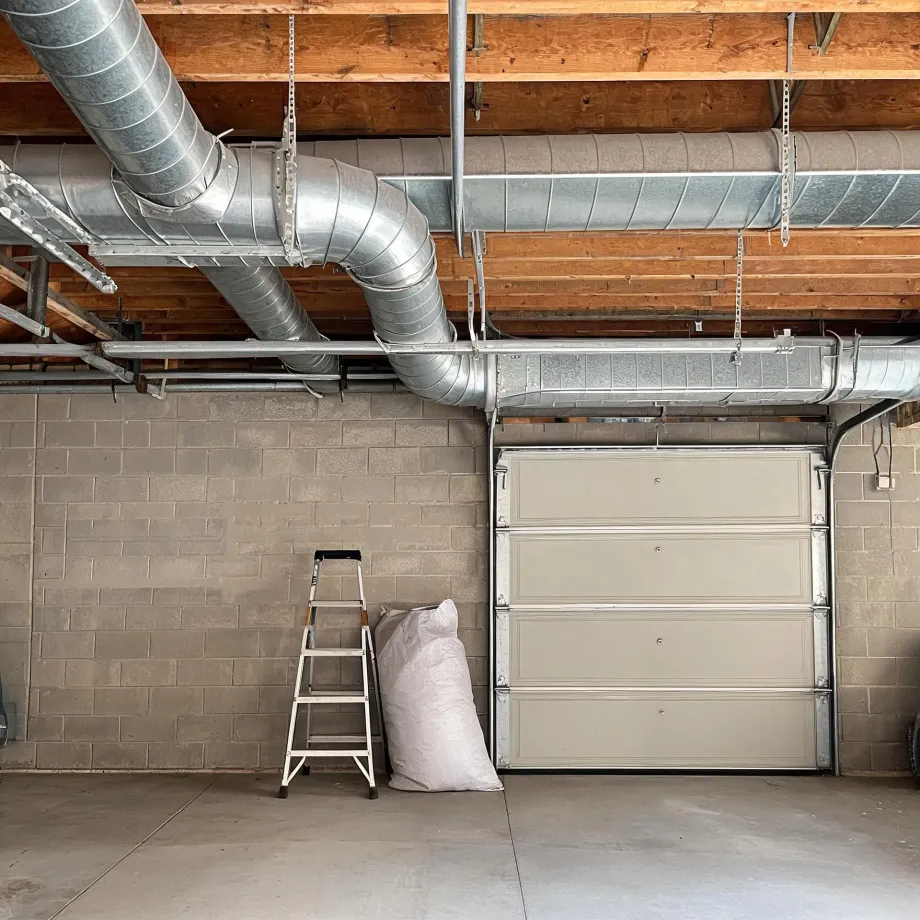
Ductwork laid in for an older central system was sized around different airflow demands than a heat pump produces, and what a contractor finds when they open the runs determines whether the installation is a straight swap or a more involved retrofit. Half the homes in Chicot County, Arkansas were built in 1979 or earlier (2020-2024 ACS 5-year). That depth of vintage means the existing duct layout in a given house reflects choices made for equipment long since replaced, and the routing, the sizing, and the condition of those passages are what a contractor has to assess before the new unit is ever ordered.
What a Heat Pump Installation Puts in Your Home
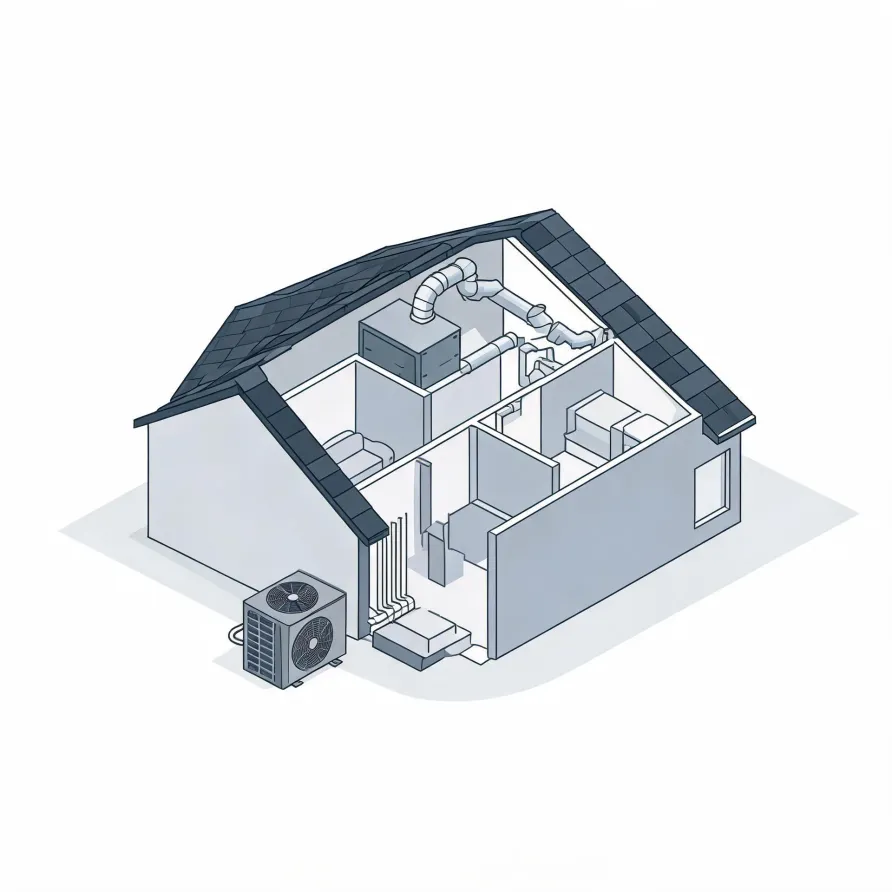
The outdoor unit is the piece most homeowners notice first. It sits on a pad beside the house and holds the compressor and the coil that exchanges heat with the outside air. Inside, the air handler mounts in a utility space, closet, or attic and moves conditioned air through the home.
A refrigerant line set runs between the two units, connecting the outdoor pad to the air handler. A thermostat goes on an interior wall and gives the homeowner control over the whole system. A condensate drain line carries moisture away from the air handler to a floor drain or outside.
The drawing shows a typical layout, and a licensed contractor determines exactly what goes where in your house.
Find a contractor in Chicot CountyChicot County, by the numbers
112 severe weather events were recorded in Chicot County, Arkansas between 2015 and 2024.
NOAA National Centers for Environmental Information, Storm Events Database, bulk CSV export, events 2015-01-01 through 2024-12-31.Half the homes in Chicot County, Arkansas were built in 1979 or earlier (2020-2024 ACS 5-year).
U.S. Census Bureau, 2020-2024 American Community Survey 5-Year EstimatesChicot County, Arkansas holds 5,108 housing units (2020-2024 ACS 5-year).
U.S. Census Bureau, 2020-2024 American Community Survey 5-Year EstimatesOwners occupy 69.2% of the occupied homes in Chicot County, Arkansas (2020-2024 ACS 5-year).
U.S. Census Bureau, 2020-2024 American Community Survey 5-Year EstimatesCodes & Standards Covering Heat Pump Installation in Chicot County, Arkansas2 sourced rules and standards
Licensing and Legal Requirements in Chicot County, Arkansas
An Arkansas HVACR licence is good across the state: no city or county may require its own licence to do HVACR work, though local permits and inspections still apply.
Arkansas requires an HVACR licence or registration: it is unlawful to do HVACR work without the appropriate one unless the chapter exempts you.
Severe Weather Events in Chicot County
Chicot County's climate puts real demands on heating and cooling equipment over its lifetime. How often the weather turns severe shapes how hard a heat pump has to work and what it needs to be built to handle.
112 severe weather events, 2015–2024. Source: NOAA National Centers for Environmental Information, Storm Events Database.